


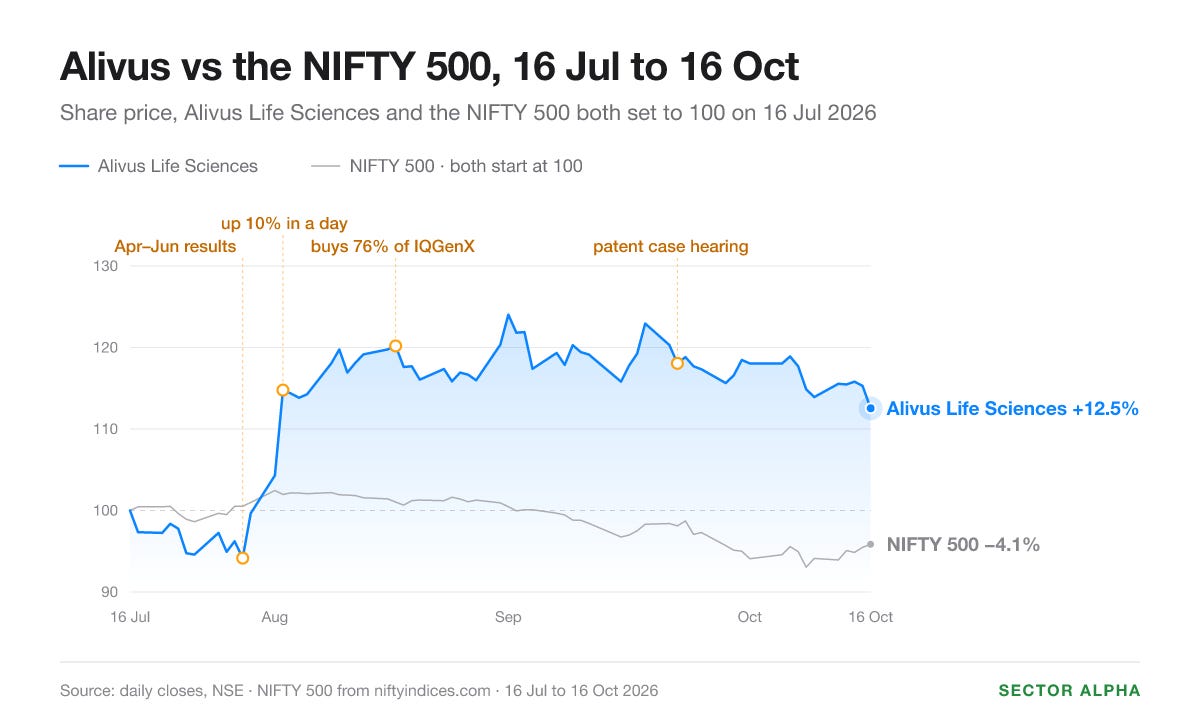
alivus is up 12.5% in three months. the nifty 500 fell 4.1% over the same three months, 16 july to 16 october
the short reason: it made its best april to june profit ever, and all the growth came from customers other than glenmark
a week later it’s still ahead. on 23 october alivus was up 7.4% from 16 july, the nifty 500 down 7.8%
what moved it, and when
the share was drifting lower until its april to june results came out on 30 july
then it jumped 22% in three trading days. profit was up 32% while sales grew only 6%
after that it just held its ground while the nifty 500 kept falling. a court hearing in september over one drug’s patent barely moved it. that steady hold is where most of the gap came from
the reasons, ranked
first i checked whether that profit jump is real or just a lucky quarter. mostly real. here’s what’s pushing it, biggest first
1. more of its newer products, sold to people who aren’t glenmark
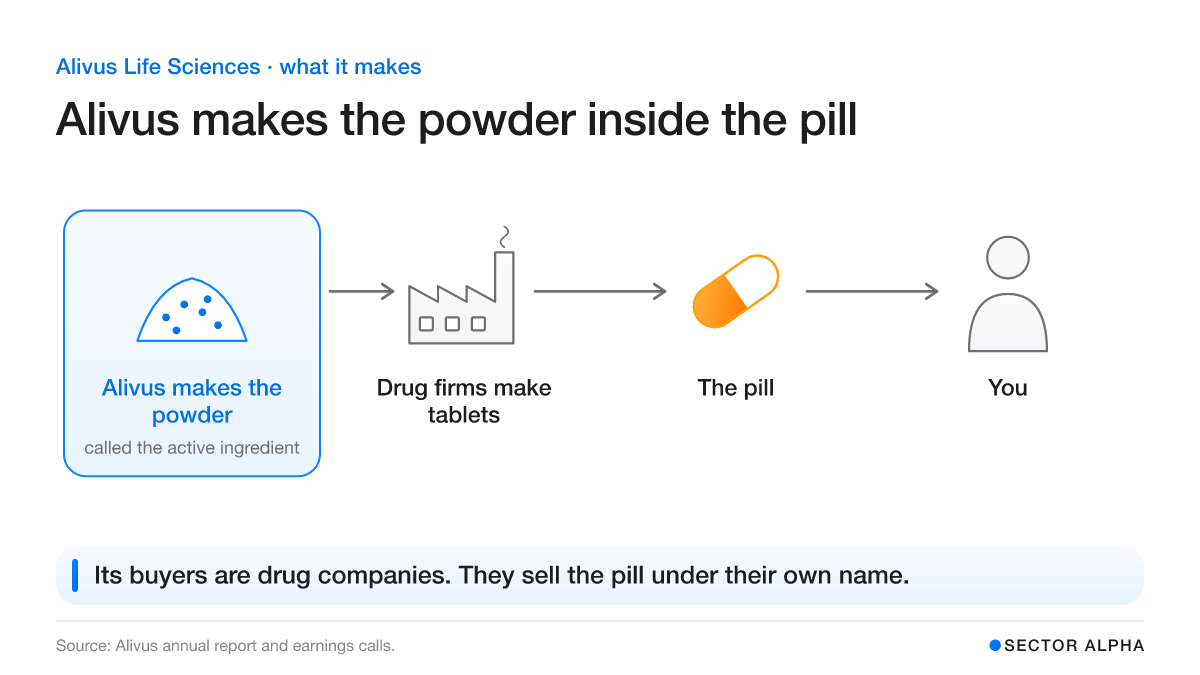
alivus makes the active ingredient in medicines, the powder that does the work. drug companies buy it, turn it into tablets and sell them under their own name
it launched 11 new products in the year to march 2026. in april to june, sales to everyone except glenmark grew 26.5%. about 7 points of that came from the weaker rupee. take that out and it’s roughly 20% growth, and almost all of it is more units sold, not higher prices
2. those newer products keep more of each sale
what’s left after paying for raw materials was about ₹385 cr in april to june, against ₹332 cr a year before. up 16%, while sales grew 6%
as a share of sales that went from about 55% to 60%
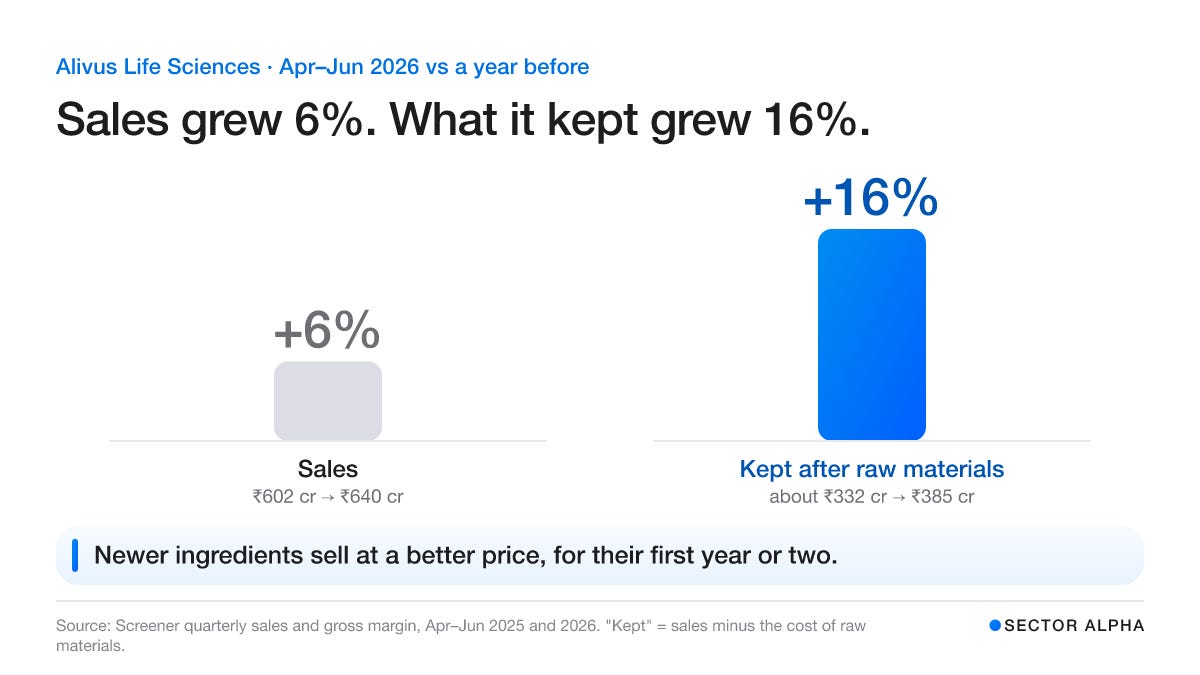
the catch: a new ingredient usually sells at a better price for its first year or two, then others copy it. so this only lasts if the launches keep coming
3. the weaker rupee
margin here means the share of sales left as profit before interest, tax and wear and tear on machines. the company’s own margin figure for the quarter is 36.6%. that counts ₹22 cr of other income, which includes gains from the weaker rupee. leave it out and the margin is 33%. the rupee part can go away as easily as it came
one thing is NOT helping, even though management says it is. spreading fixed costs over more sales. in the last two quarters, staff and overhead costs grew faster than sales
and one thing is pulling the other way. glenmark, its old parent, is still its biggest customer and buying less every year. 41% of sales in the year to march 2022. 29% by march 2026. in april to june its orders roughly halved, down 52.6%, while it used up stock it already had
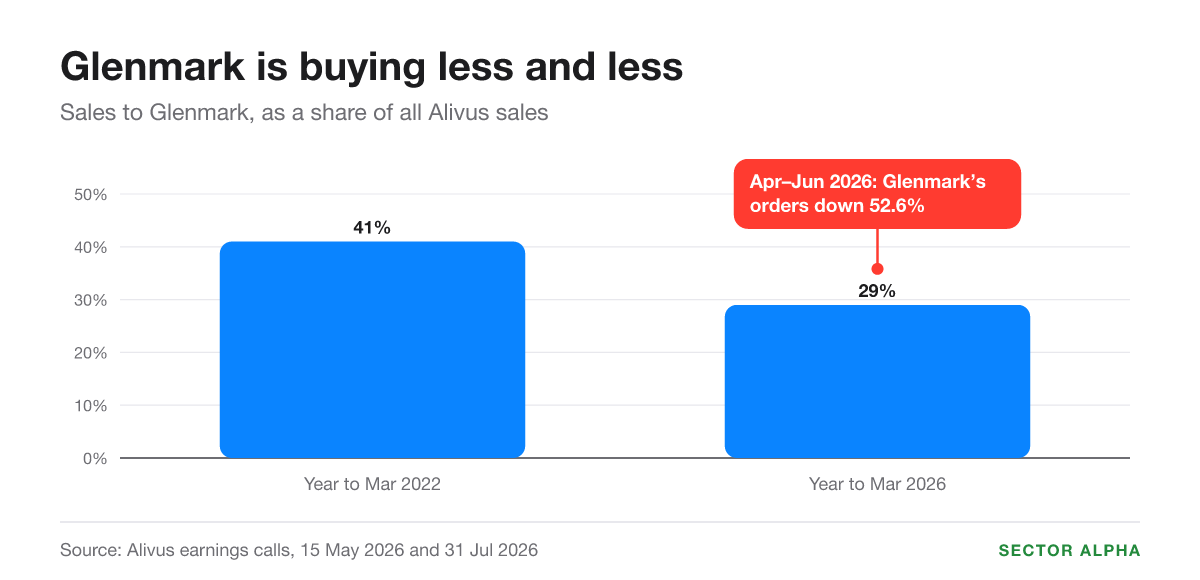
so the newer business is carrying the old one. for now it’s winning comfortably
why it can keep building
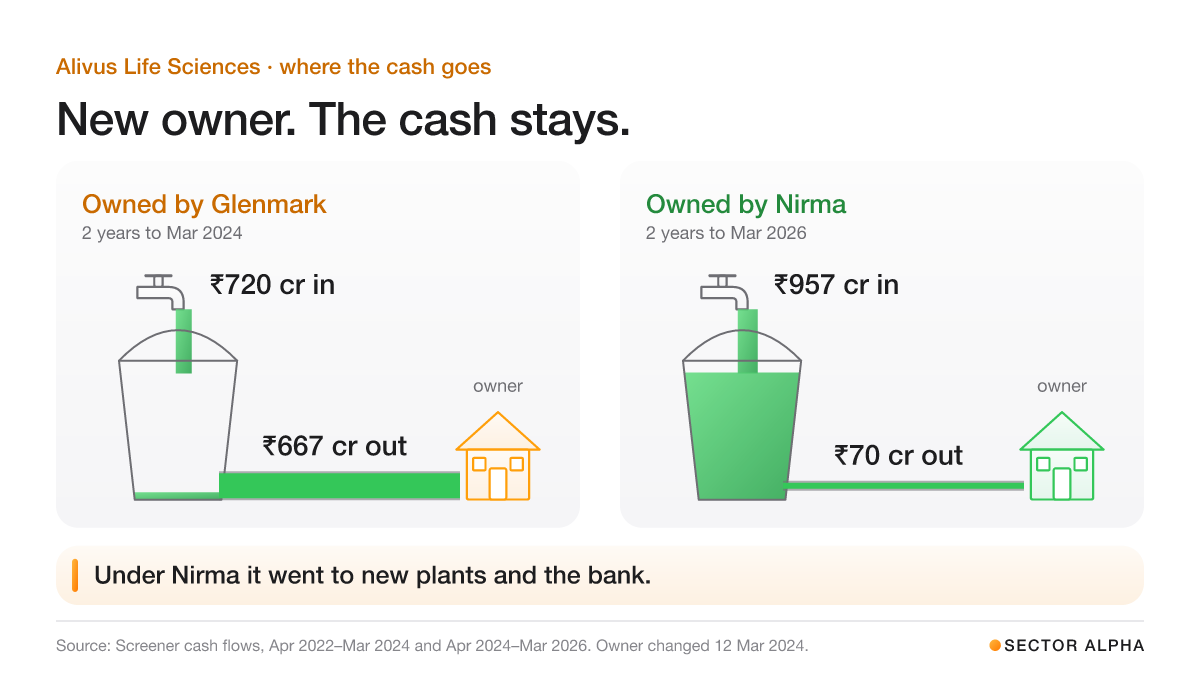
before march 2024 alivus belonged to glenmark, which owned 82.84% and itself had ₹4,921 cr of debt in september 2023. in the two years before the sale alivus made ₹720 cr of cash from its business. ₹667 cr went straight out, almost all dividends
then nirma bought 75% at ₹615 a share. yes, the detergent and cement nirma
in the two years since, alivus made ₹957 cr of cash and only ₹70 cr went out
by march 2026 it had ₹782 cr sitting in cash and short term investments
that money is going into reactor tanks, the big vessels the chemistry runs in. it had 1,198 kilolitres of them in march 2024 (a kilolitre is 1,000 litres). 2,690 are planned by march 2028. more than double. the part due in the year to march 2027 is ₹540 cr of building, and the CFO, the finance head, says all of that is paid from its own cash, no loans
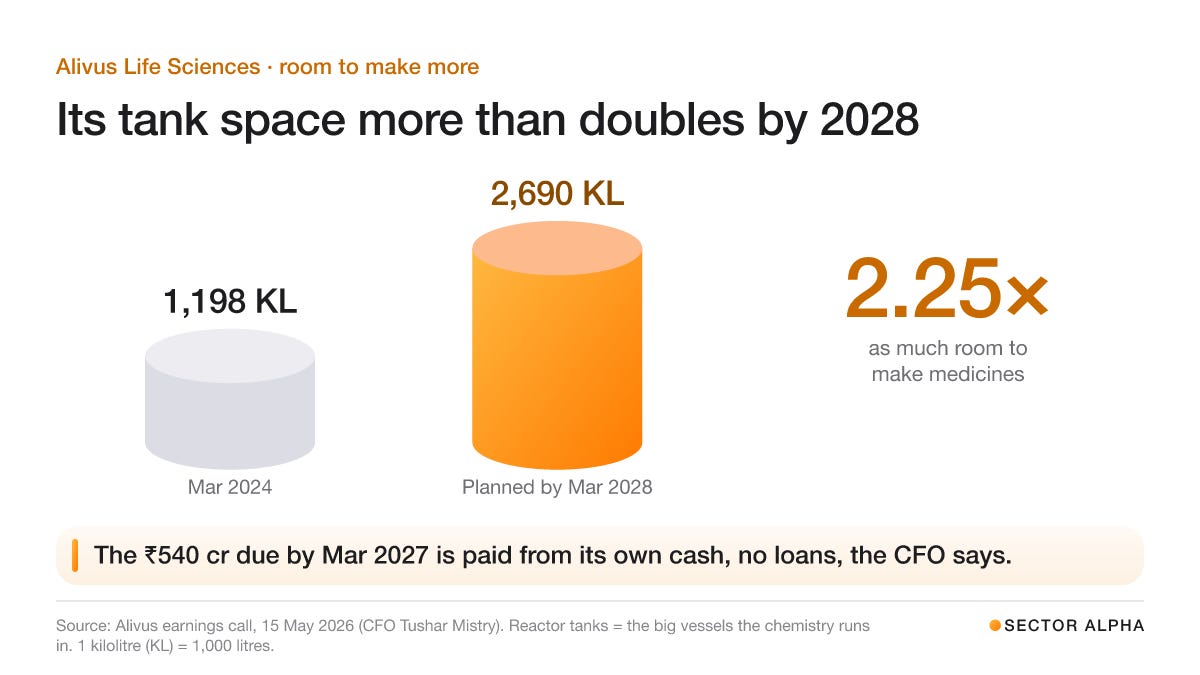
so the next round of launches has somewhere to be made
did management deliver
i went through their calls from may 2025 to july 2026 and wrote down every promise with a date on it. five
profit margin of 28 to 30%. the year to march 2026 came in at 31%, then april to june at 33%. kept, and beat
the new solapur plant. first due january to march 2026. then april. then july. now “by diwali”. pushed three times
the two plant expansions at ankleshwar and dahej. due november to december 2025. moved to april to september 2026
money spent on plants in the year to march 2026. said ₹550 to 600 cr. actually spent ₹306 cr
one or two new deals to make an ingredient to order for a single drug company, by june 2026. now “early second half” of the year, so october 2026 at the earliest
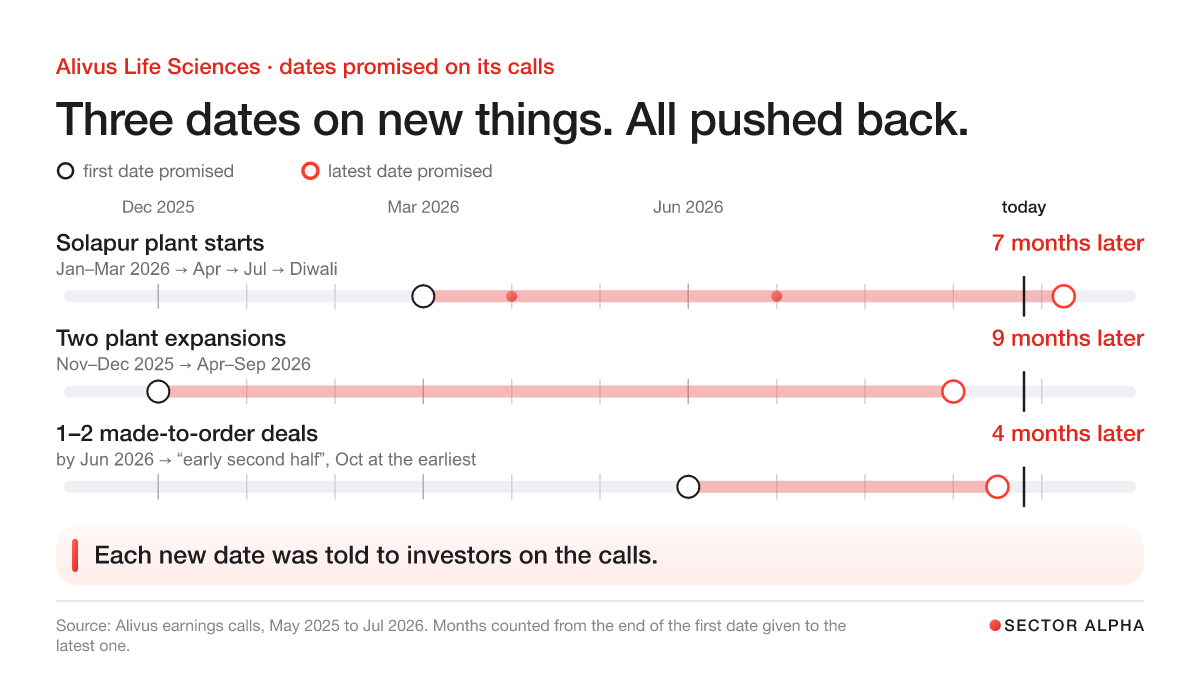
so 1 of 5 kept. the one they kept is about running today’s plants well. all four misses are about building new things
i don’t read that as dishonest. the delays were told to investors each time, and the court case is about one drug’s patent, with no finding against them. but it means i’d discount any new date they give
what could stop it
this is the bit that still worries me
the price has already done a lot. from its low in early 2023 the share is up about 3.5 times. profit per share is up only about 1.5 times. most of the rest is people paying more for each rupee of profit
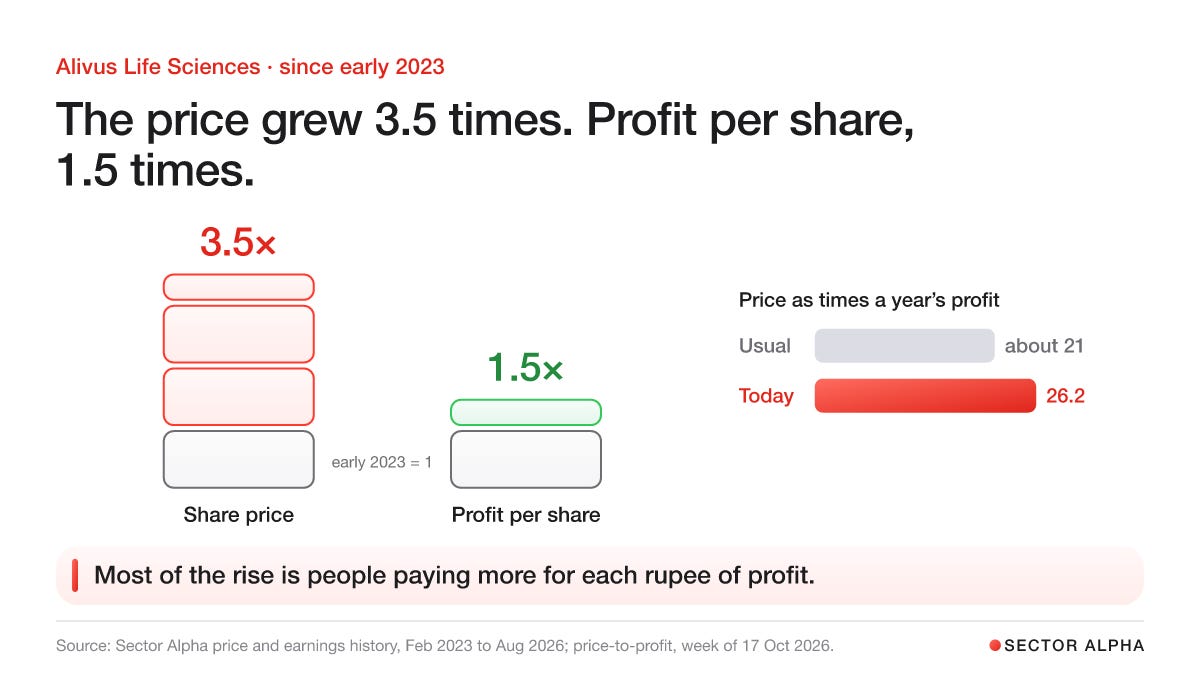
today the price is 26.2 times a year’s profit. its usual is about 21 times. it used to trade below that usual level. now it’s well above it
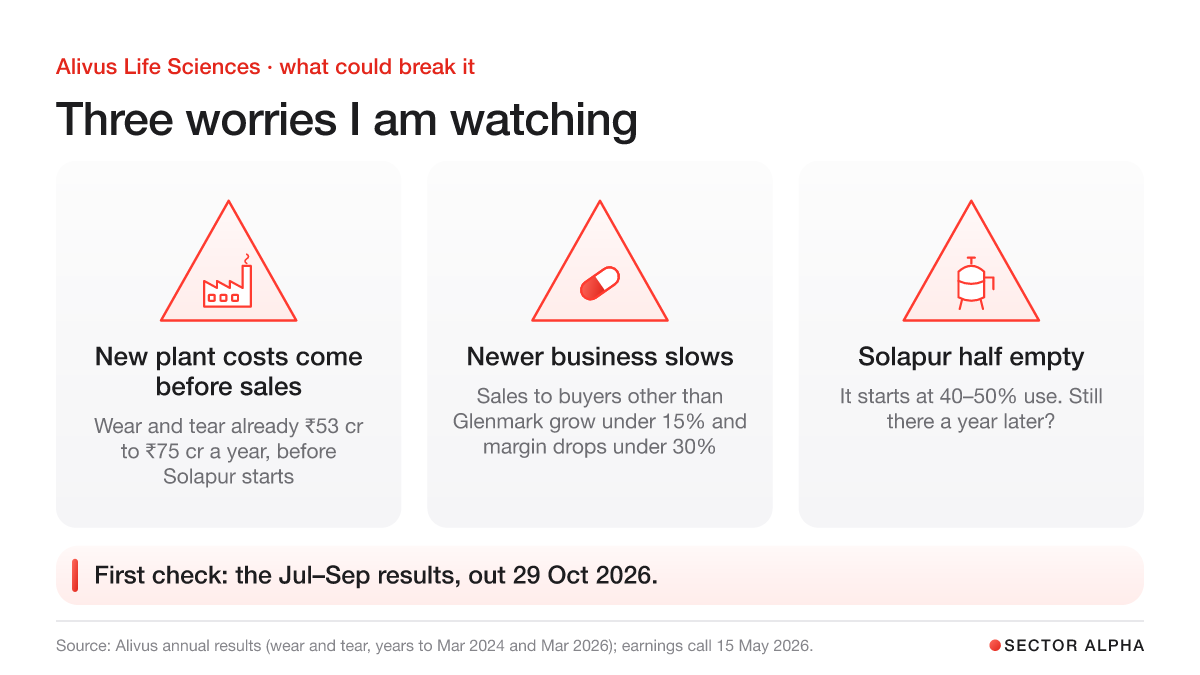
there’s an old pattern with new plants. they show up as costs before they show up as sales. wear and tear, staff, power, all start the day a plant opens. sales come later, as it fills up. so profit often stalls for a while right after a big plant starts
alivus’s yearly wear and tear charge already went from ₹53 cr to ₹75 cr in two years, and solapur hasn’t even started
two things would change my mind
if sales to everyone except glenmark grow less than 15% in a quarter while the profit margin drops under 30%, the newer business is no longer carrying the old one
if solapur starts and sits half empty. they said it begins at 40 to 50% use. if it’s still there a year later, the cash built tanks nobody needed
next to its peers
laurus labs, another big indian maker of drug ingredients, is up 32.3% over the same three months. divi’s labs, the biggest one, is up 25.0%
so alivus beat the market, but not the leaders in its own industry
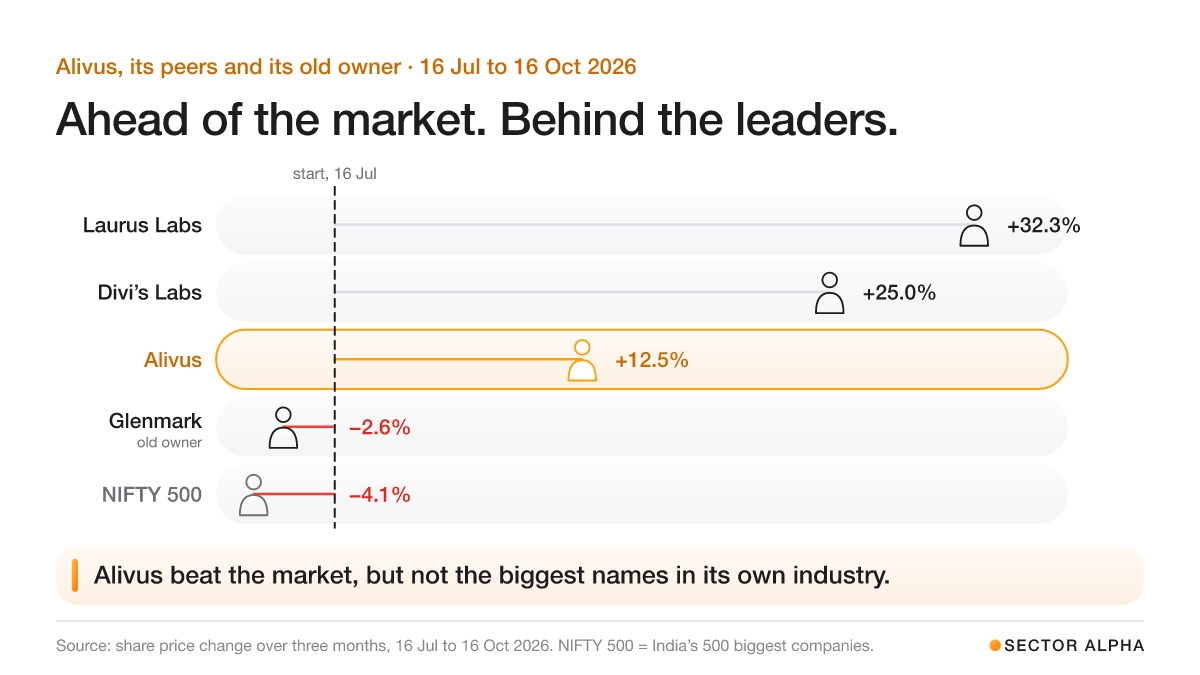
and glenmark, the old parent? down 2.6%
check it yourself
the july to september results come out on thursday 29 october. the call with investors is the next morning, friday 30 october, at 8:30
open the results on the company’s website or the stock exchange site. find sales to “non-GPL” customers in the presentation (GPL means glenmark). anything under 15% growth is the warning
find the profit margin. under 30% is the second warning
on the call, listen for solapur. has it started, and how full is it
find the half year cash flow page. compare money spent on plants with the ₹540 cr plan for the year. near ₹270 cr means they’re catching up
if you’ve worked at a company that makes drug ingredients, how long does a new launch keep its better price before others copy it? one year or two?
see you tomorrow
— Roshan, Sector Alpha