


Not SEBI registered. Not investment advice. For your own research only.
Manba is a non-bank lender. Most of its loans help people buy new two-wheelers.
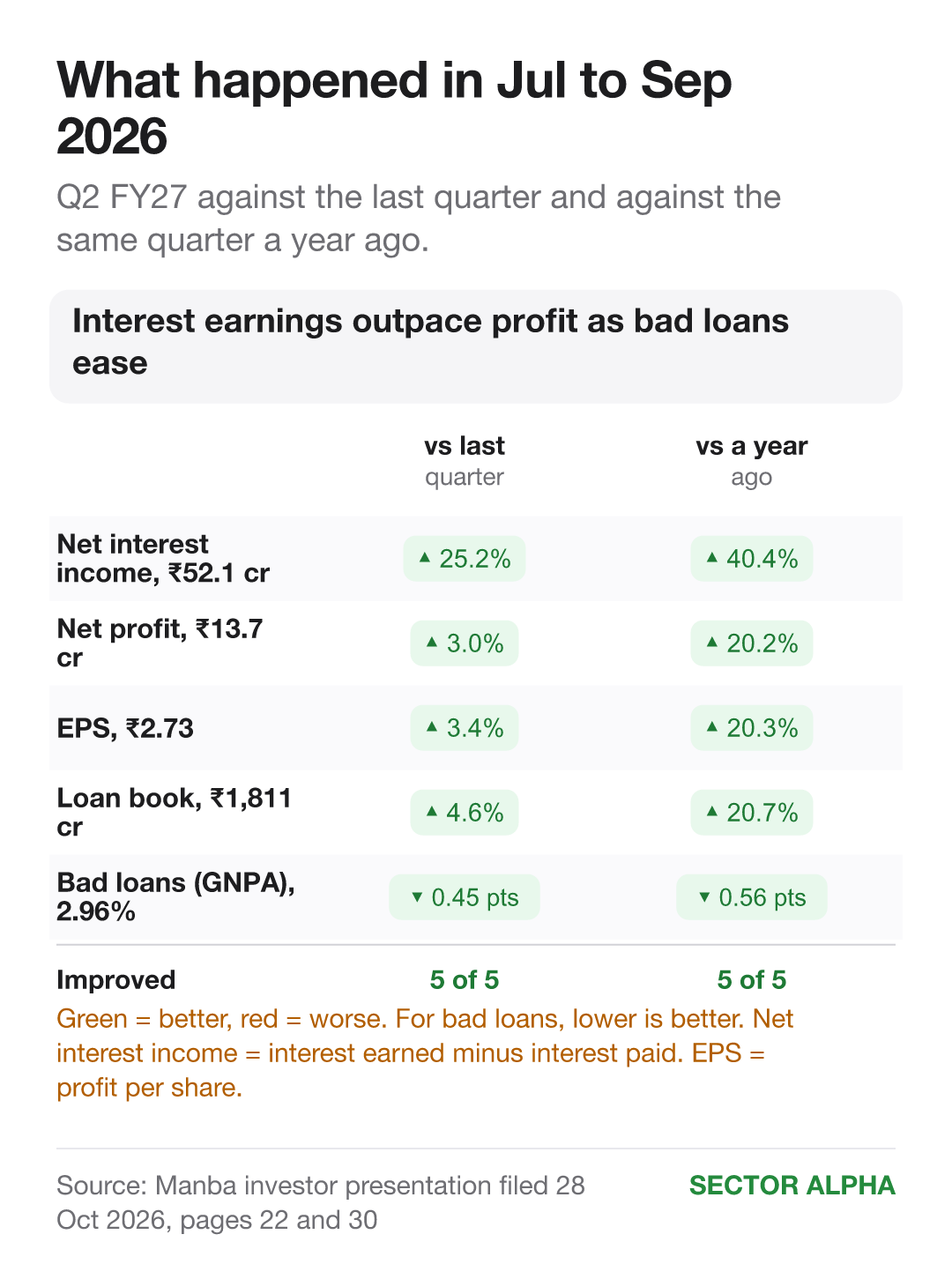
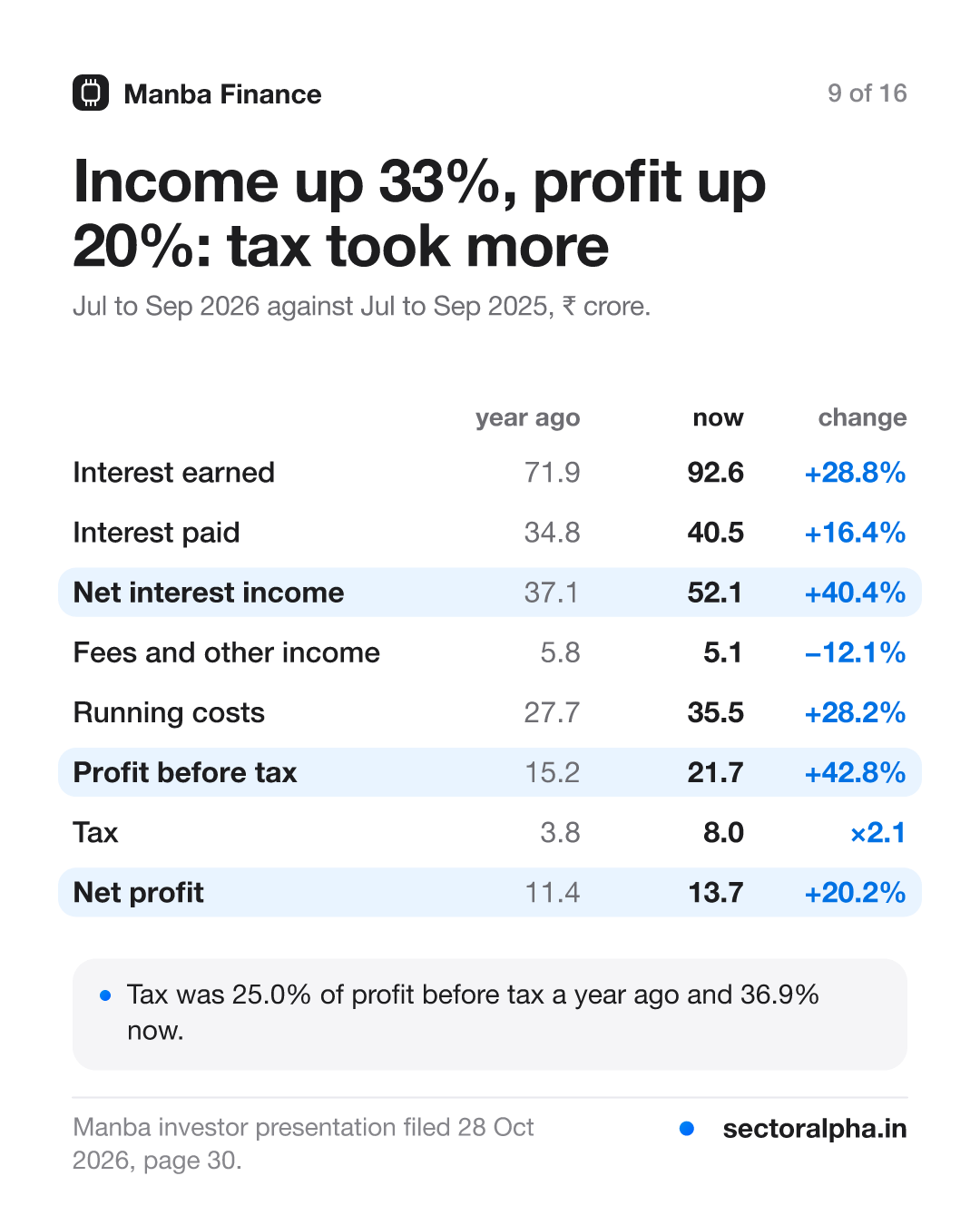
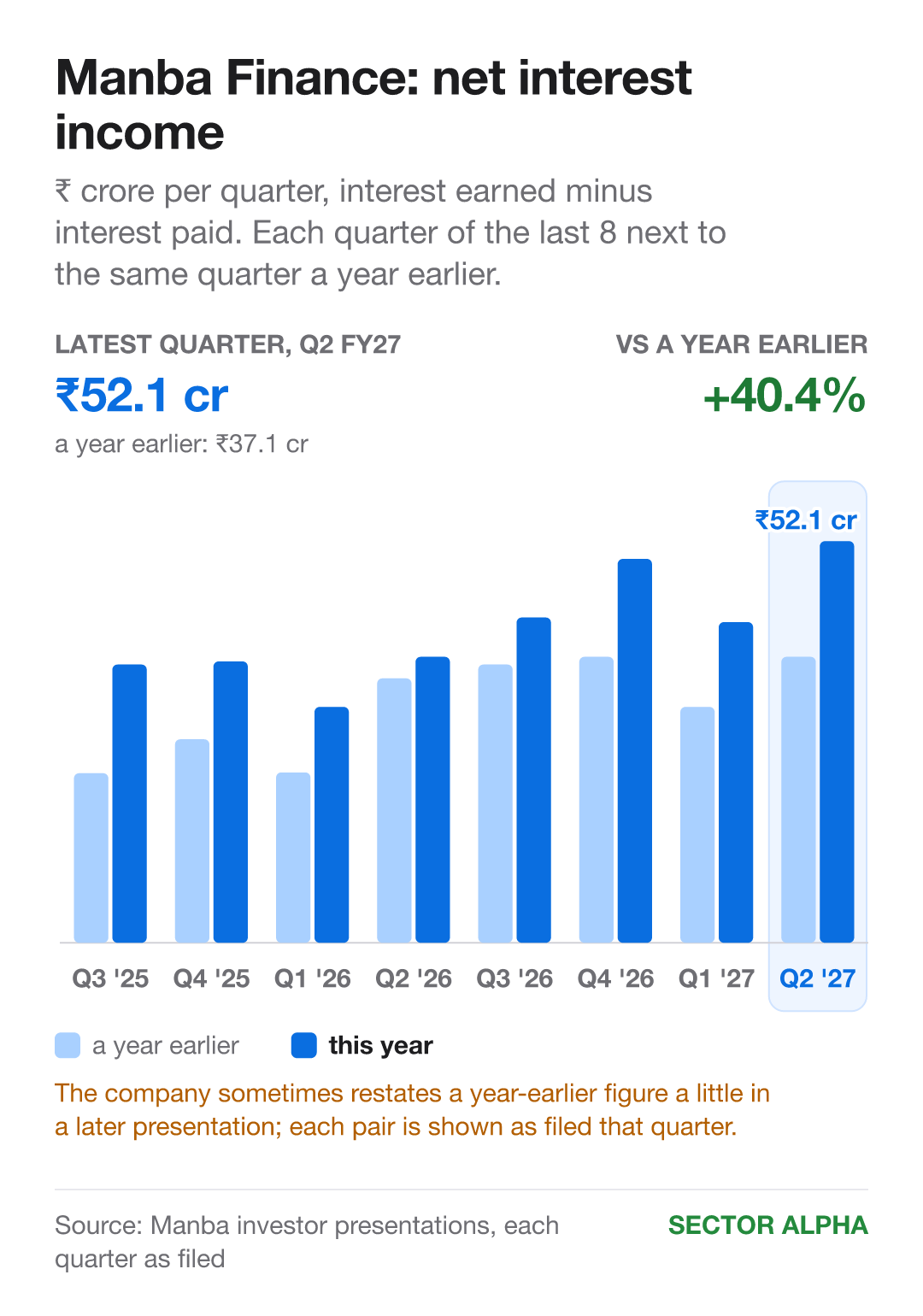
Interest earned minus interest paid: up 40%. Profit: up 20%.
Higher running costs and a higher tax bill took the difference in July to September.
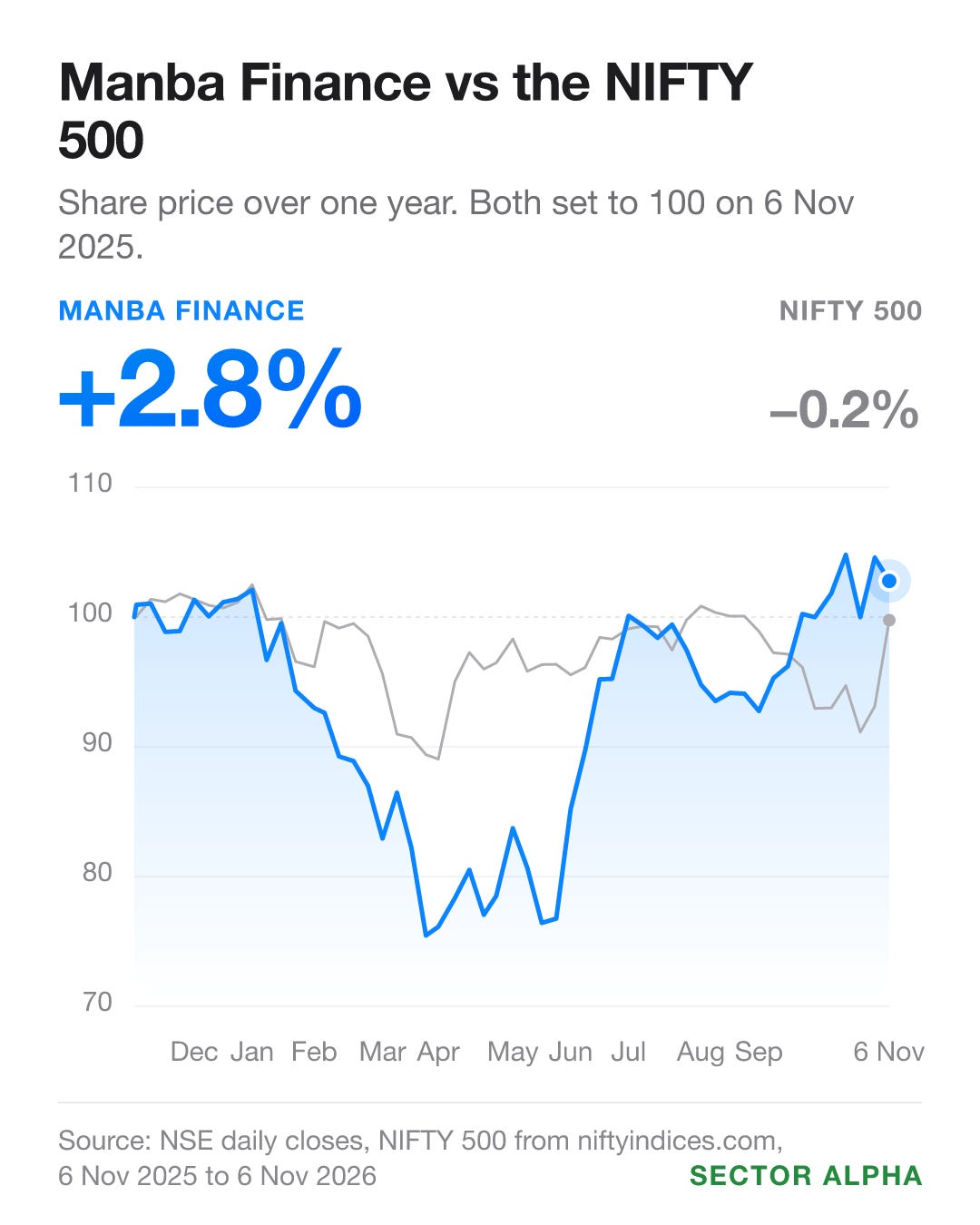
Share price in a year: Manba up 2.8%, NIFTY 500 down 0.2%.
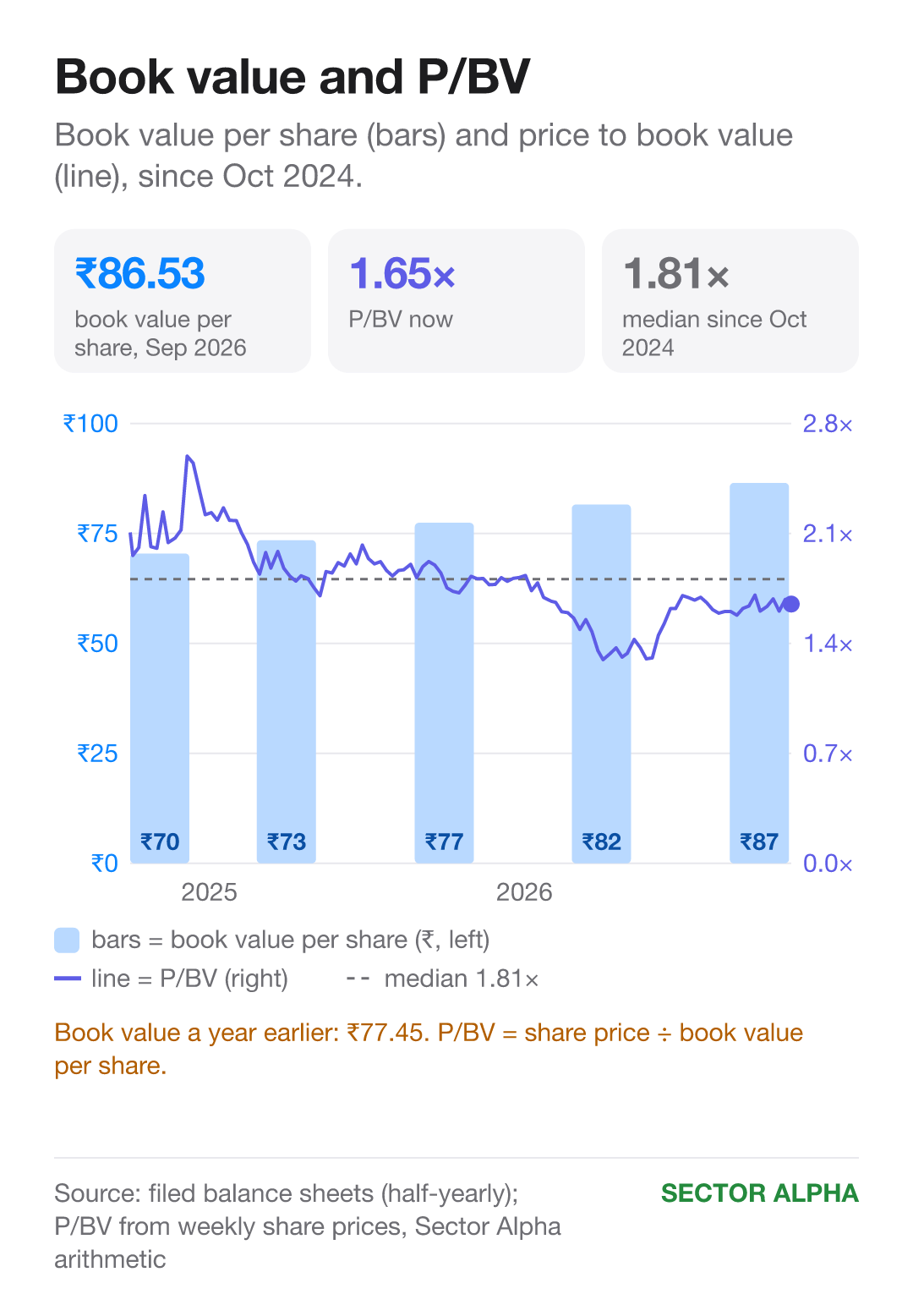
Book value and P/BV
Book value per share (shareholders’ money per share), last year: ₹77.45 → ₹86.53. Up 11.7%. Share price, same year: up 2.8%.
Book value ran ahead of the price. So P/BV (price ÷ book value per share) fell from about 1.79 to 1.65.
Its usual P/BV since October 2024: 1.81. It is below that.
Why book value grew: Manba kept its profits. First-half profit was ₹27 cr, up 28%, management said. Not in this number yet: the ₹100 cr share and warrant issue, due to come in after September.
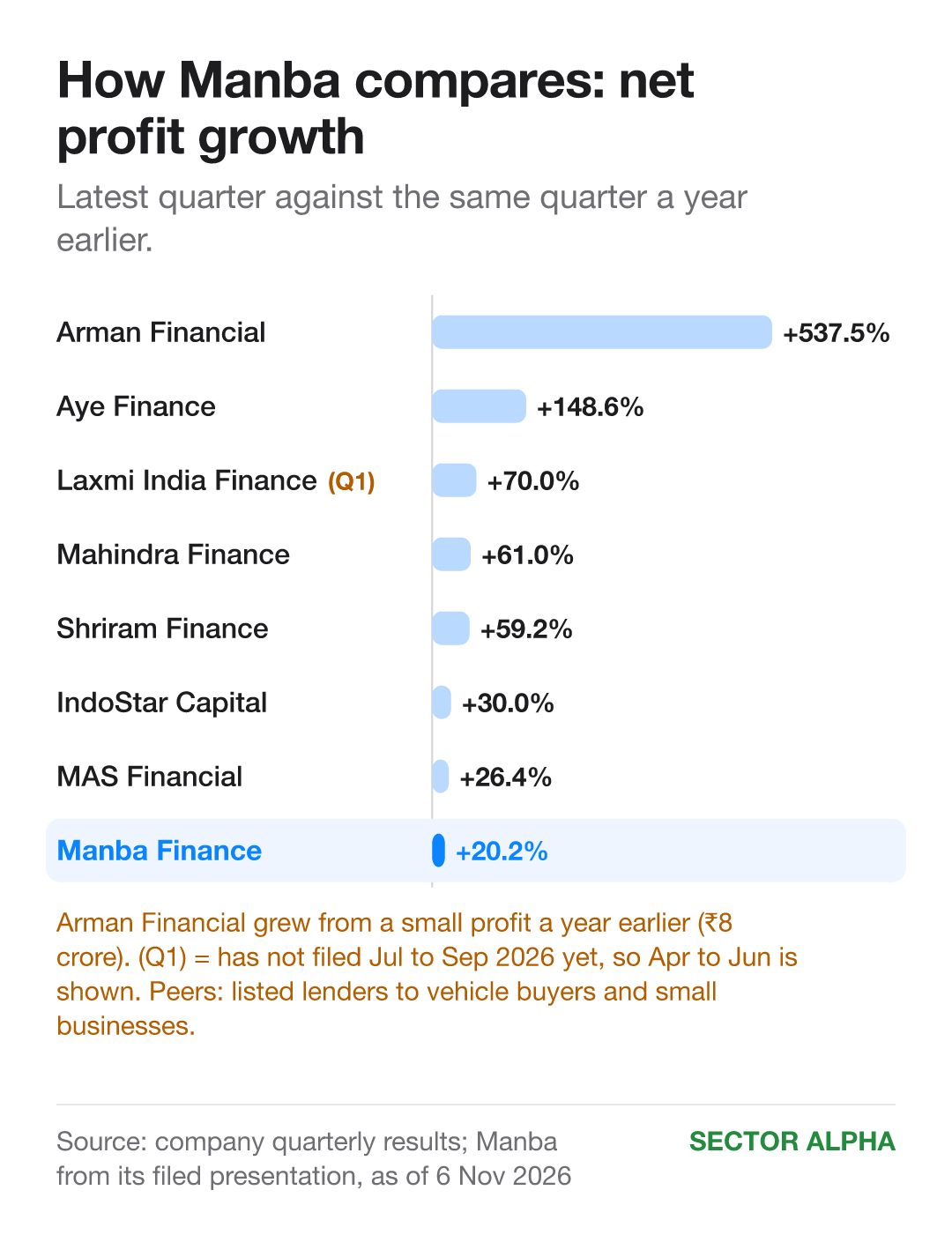
How Manba compares
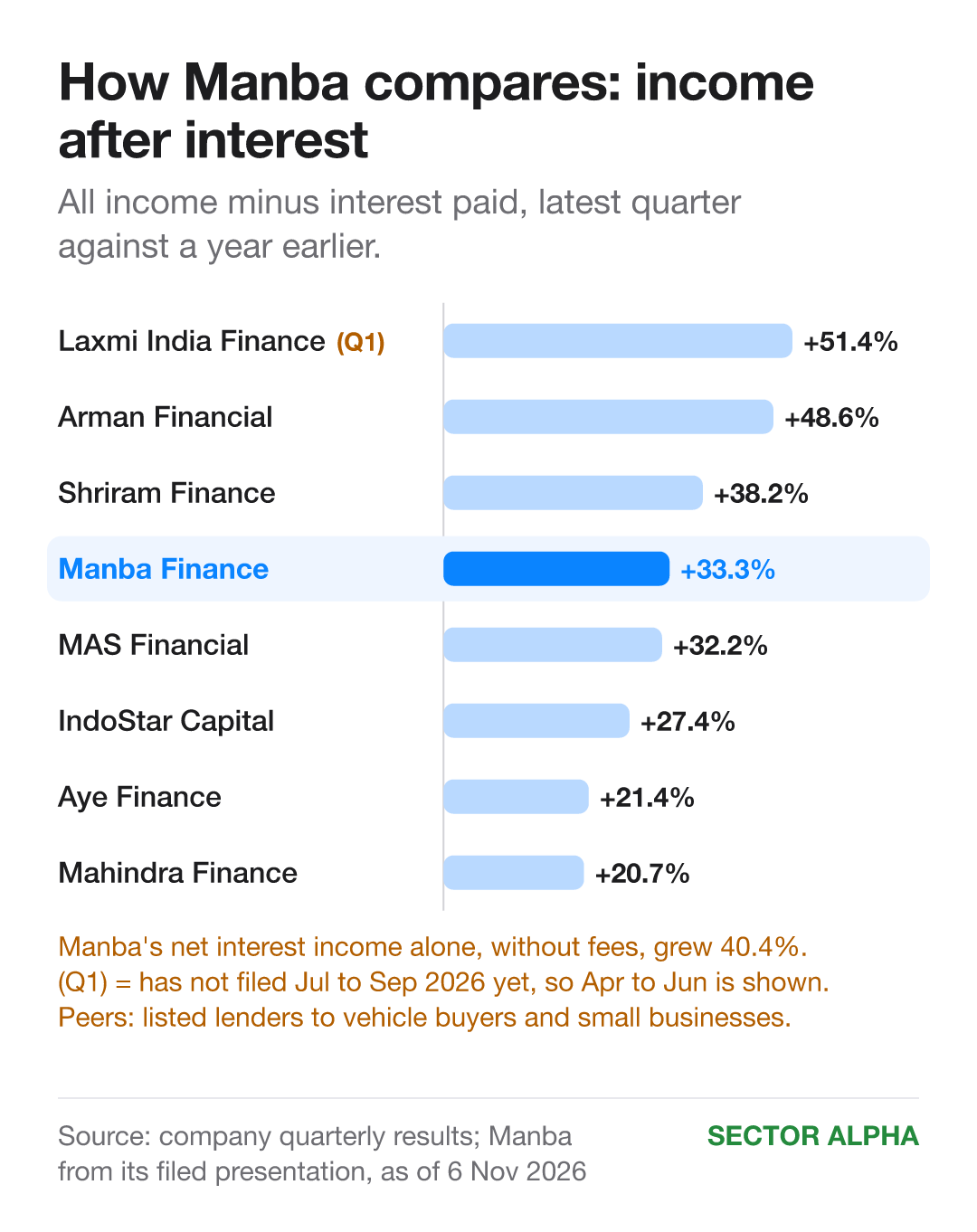
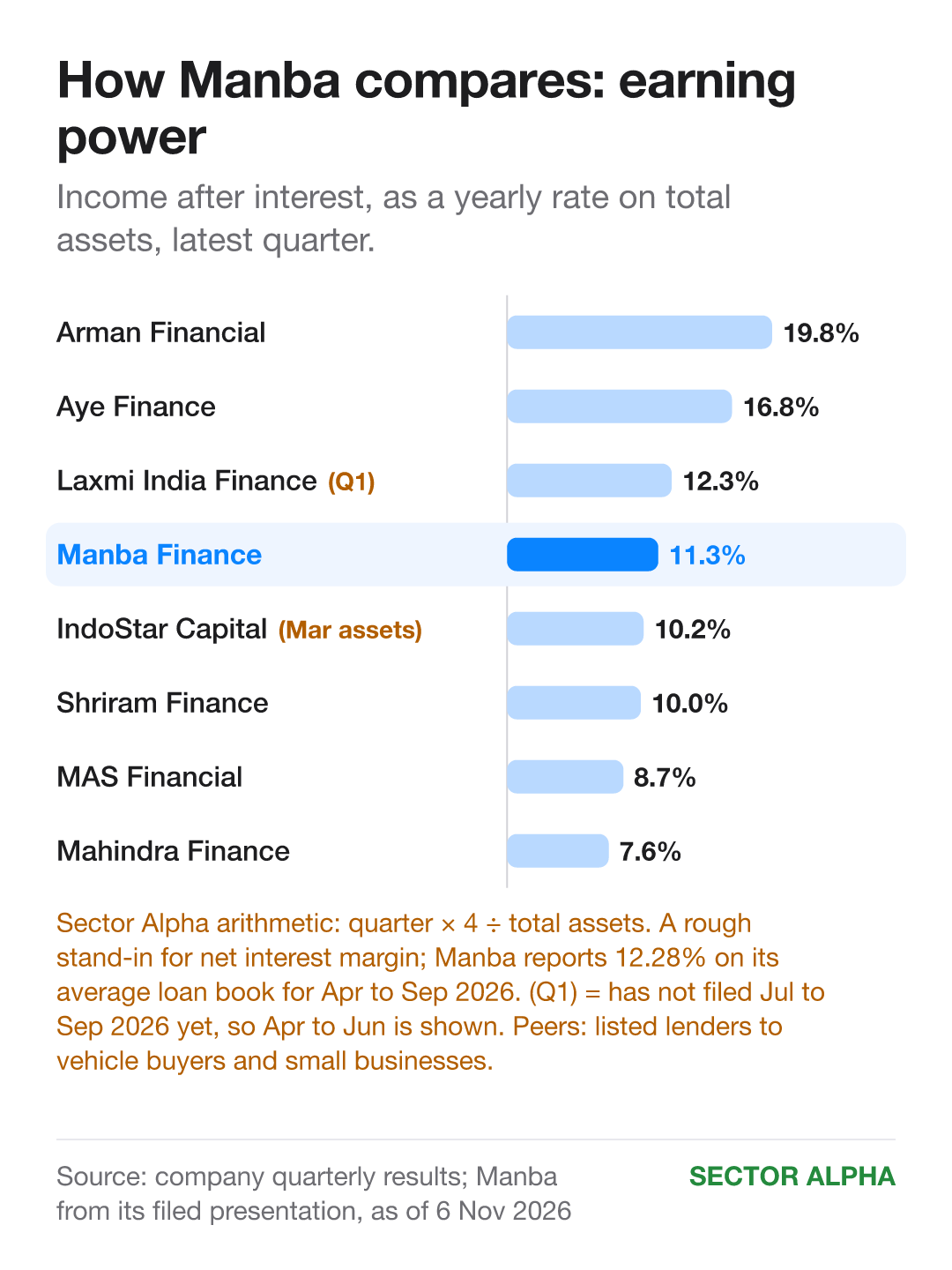
Income growth, fees included: Manba 33%, fourth of 8. (Fees fell, so this is lower than the 40% above.) Income after interest, per ₹100 of assets a year: Manba ₹11.3, fourth of 8. Profit growth: Manba 20.2%, last of 8.
Peers marked Q1 have not reported July to September yet.
Context: Manba is spending on new branches, a new state and more sales staff, management said.
The deep dive
What is happening
Interest earned minus interest paid: up 40% on a year ago. Profit: up 20%. Loans outstanding: up 21%. Bad loans: 2.96% of all loans, down from 3.52%.
Help: borrowing got cheaper. Drag: running costs up 28%, and tax took a bigger share of profit.
What it lends
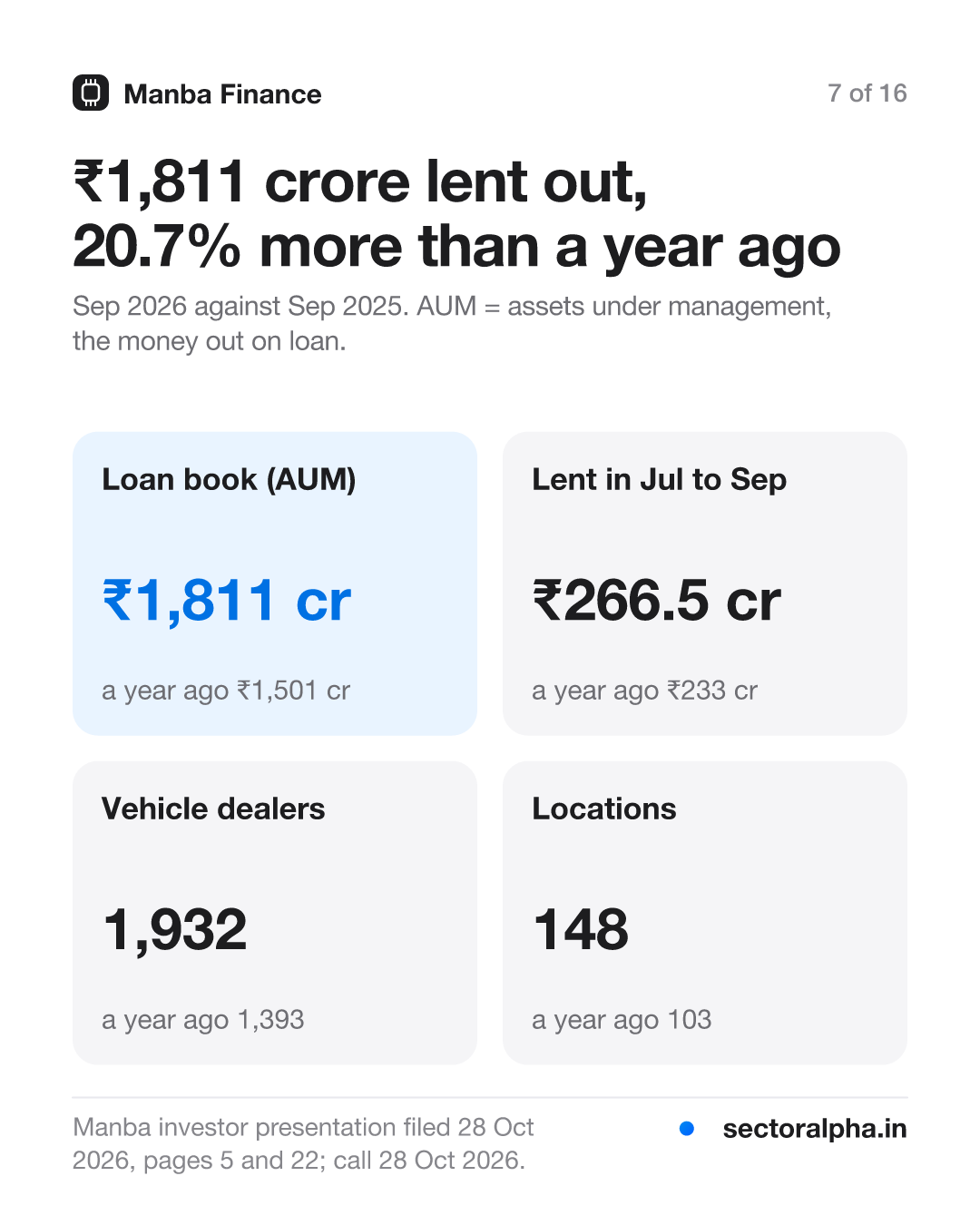
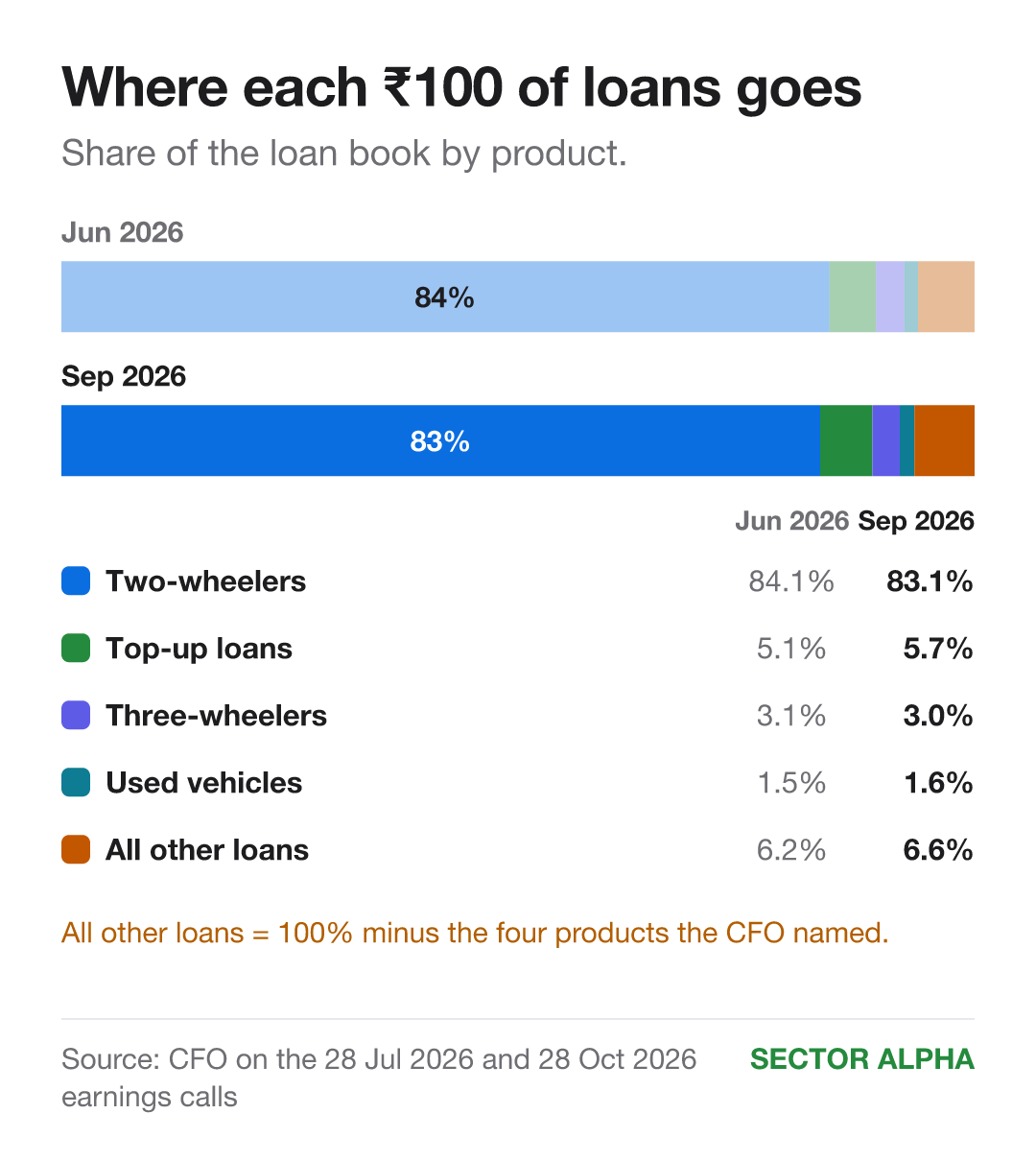
Two-wheeler loans: 83.1% of the book, down from 84.1% in June. Loans outstanding: ₹1,811 cr, up from ₹1,501 cr a year ago. Lent in July to September: ₹266.5 cr, up from ₹233 cr. Vehicle dealers: 1,932, up from 1,393. Locations: 148, up from 103.
Why the mix is changing: used two-wheeler loans earn about 27% to 28% a year, and top-up loans about 32%, management said. Newest state: Karnataka, where Manba signed about 100 dealers in its first 60 days.
Why profit grew slower than income
Fees and other income: down 12.1%. Running costs: up 28.2%. Tax: 36.9% of profit before tax, up from 25.0%. The filing does not say why.
Why costs rose: new locations, the move into Karnataka, and extra sales staff for the festive season, management said. Asked about the jump, management said comparing with a year ago is not right, and pointed to April to June instead.
Each quarter vs a year earlier
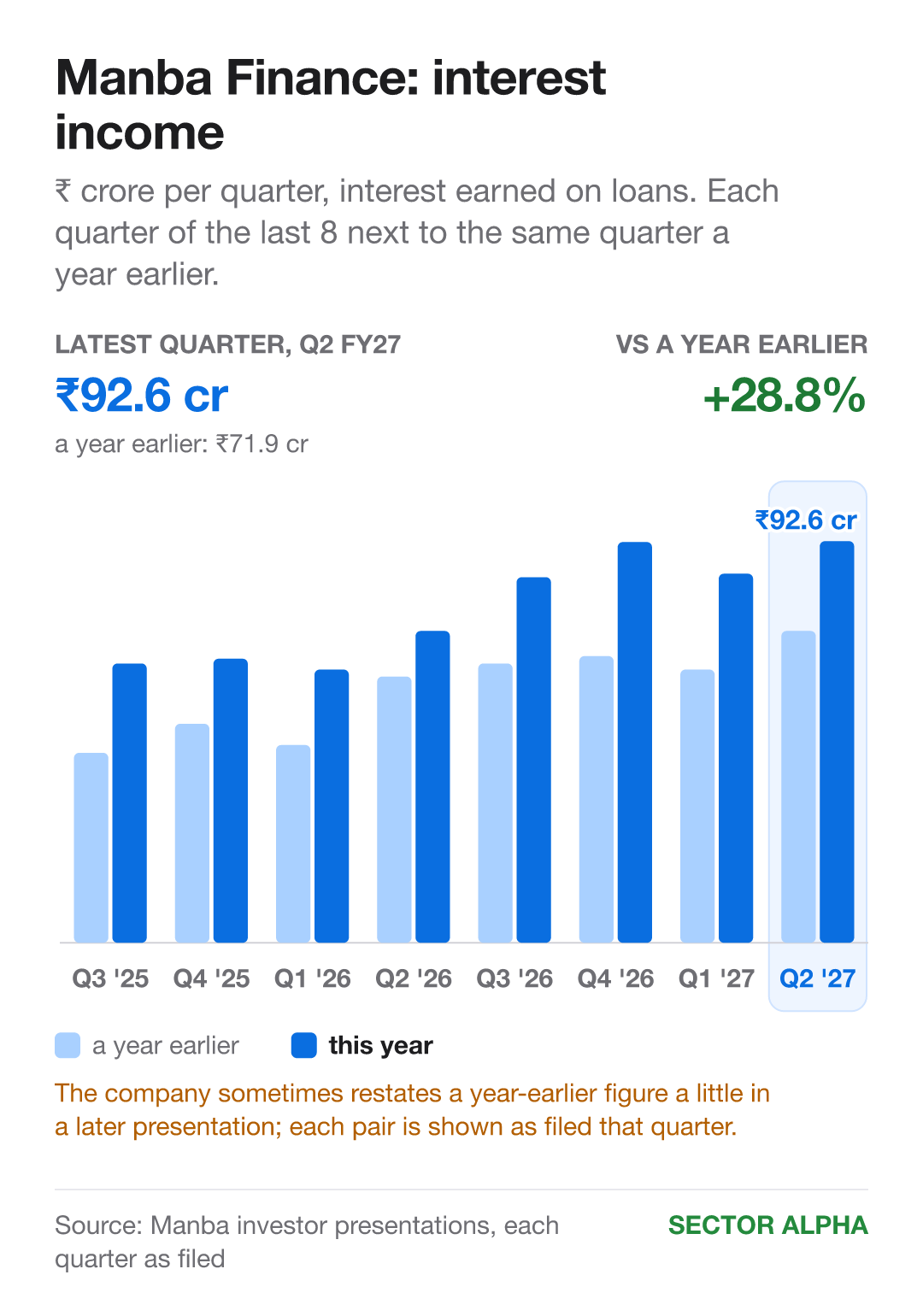
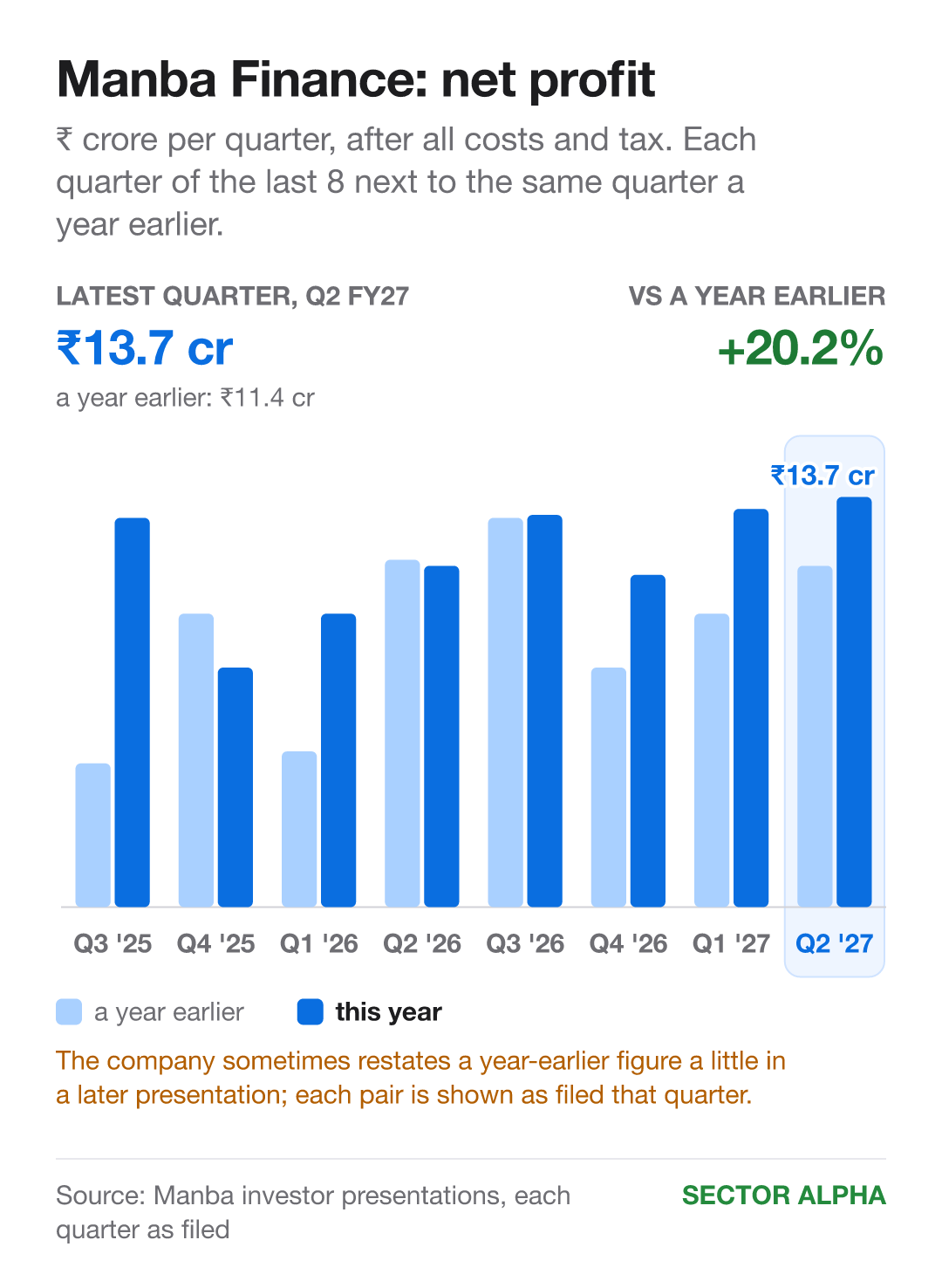
Interest earned up: 8 of the last 8 quarters. Interest earned minus interest paid up: 8 of 8. Profit up: 6 of 8. It fell in Q4 FY25 and Q2 FY26.
First half, April to September: interest earned minus interest paid up 39%, profit up 28%, management said.
Bad loans
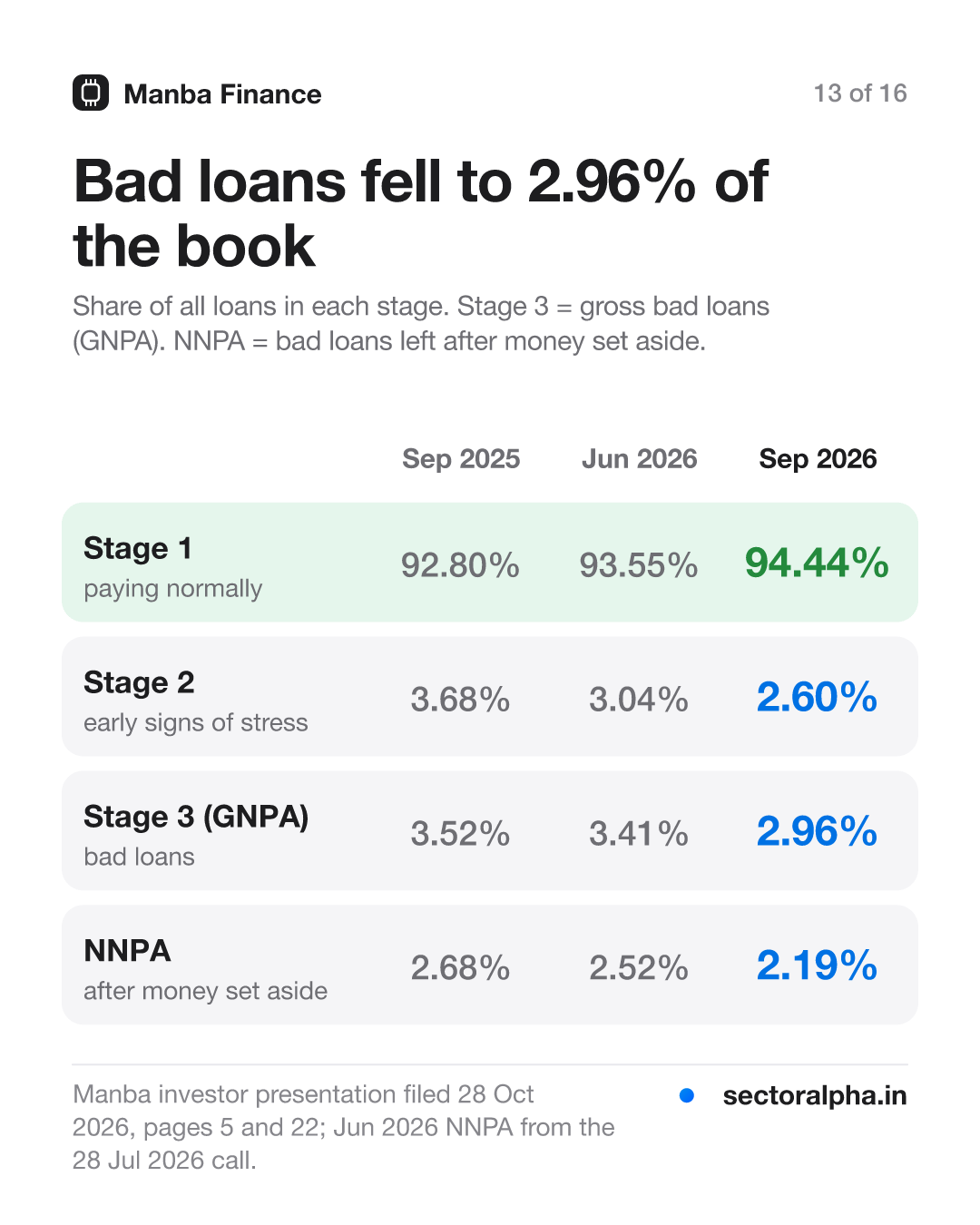
Bad loans (more than 90 days late): 3.52% → 2.96% in a year. Down. Loans starting to slip (stage 2): 3.68% → 2.60%. Down. Bad loans after money set aside for losses: 2.19%.
Money set aside for losses: ₹23 cr, against ₹13 cr the rules ask for, management said.
Borrowing and capital
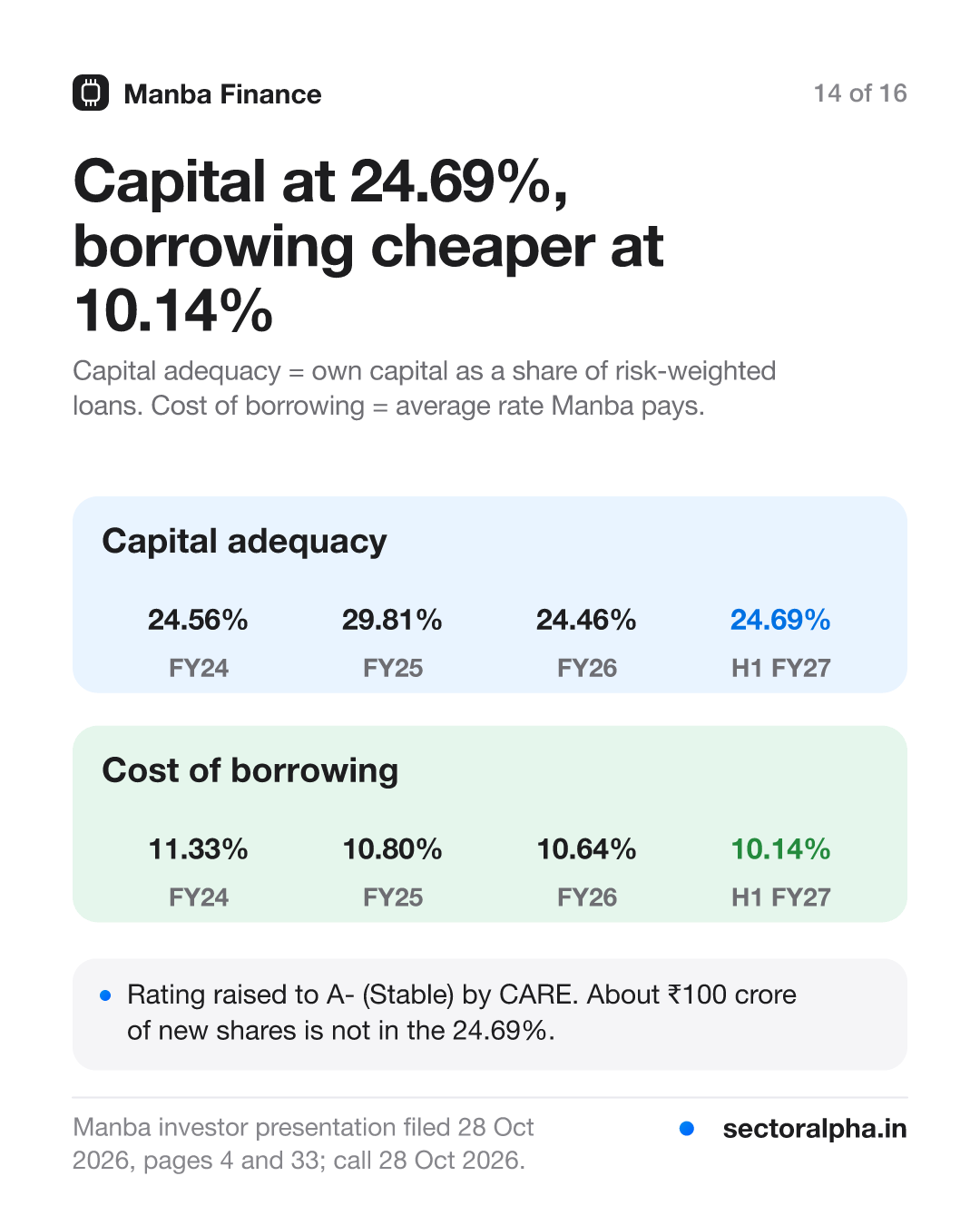
Capital cushion (its own money against its loans, adjusted for risk): 24.69%. The ₹100 cr raise is not counted yet. Average borrowing cost, April to September: 10.14%, down from 10.64% in FY26. Credit rating: raised by CARE to A- (Stable) from BBB+ (Positive).
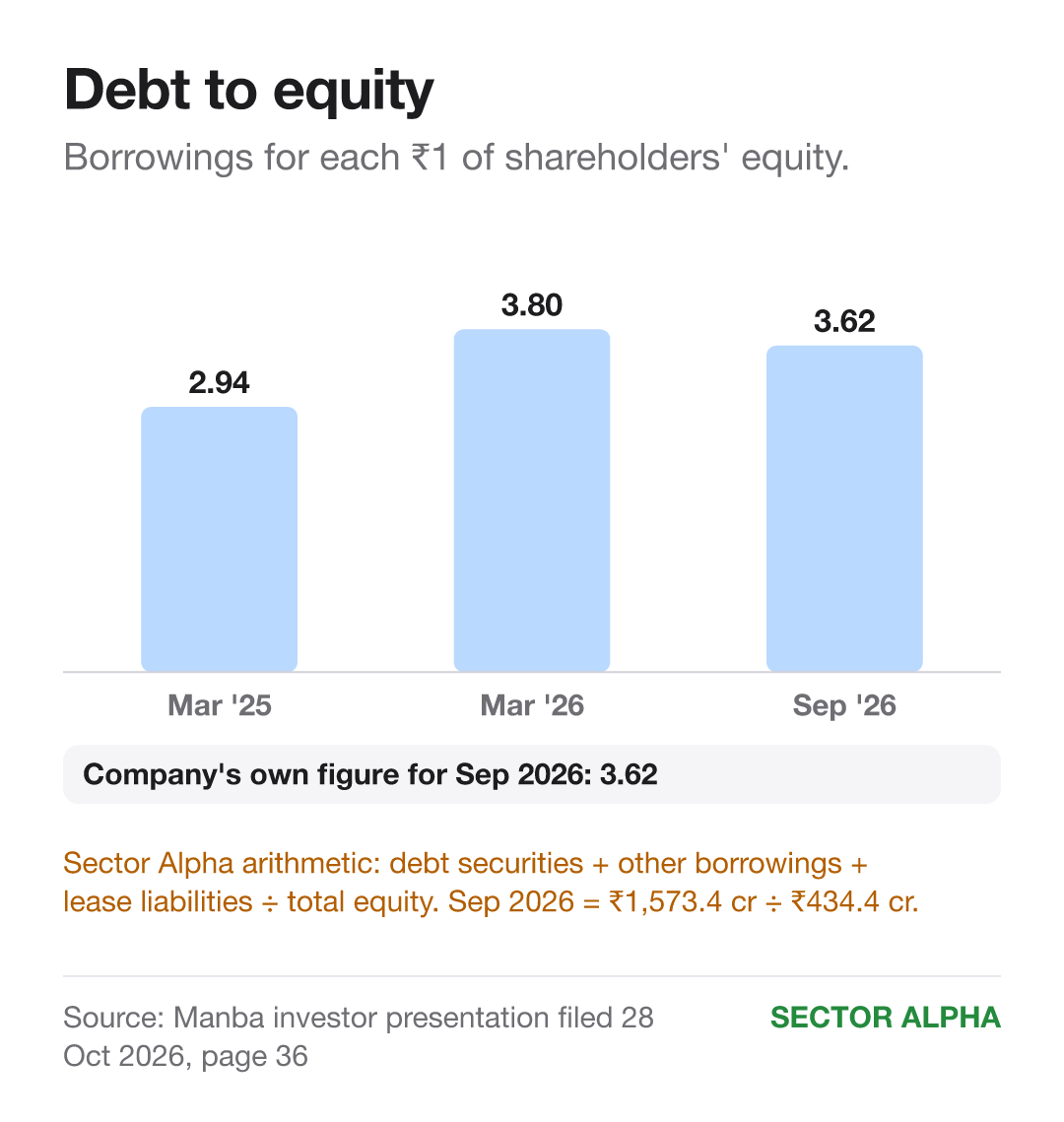
Borrowing is a lender’s raw material. Debt: ₹1,573.4 cr, 3.62 times shareholders’ money, down from 3.80 in March.
Why borrowing should get cheaper: about ₹600 cr of older, costlier loans are repaid by March, management said.
What management said, what happened
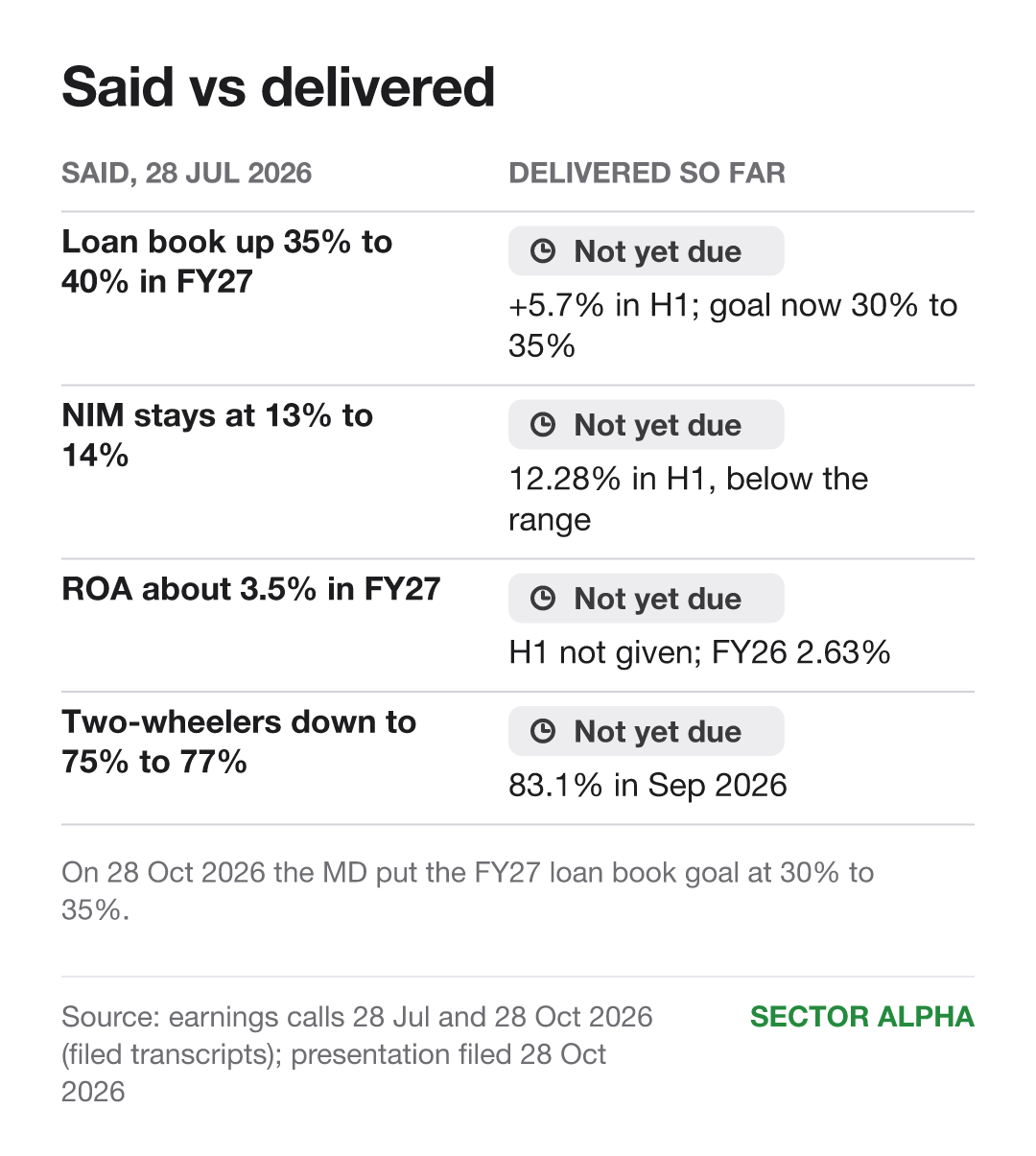
Promises from the 28 Jul call, checked on the 28 Oct call. All 4 not due yet.
Two have already moved. Loan growth for FY27: promised 35% to 40% in July. Now 30% to 35%. Margin on loans: promised 13% to 14%. First half: 12.28%.
One description changed. The ₹100 cr raise: in July, preference shares. In October, equity shares and warrants, which means more new shares.
Why is this happening
Interest paid fell: down 6.9% against April to June.
Festive demand: the loan book grew by about ₹120 crore in October 2026, after repayments, management said.
So that will be repaid by this March end. Jay Mota, Executive Director and Chief Financial Officer, on the 28 Oct 2026 call
Older borrowing at higher rates is due for repayment by March.
What to track
Loan growth: 30% to 35% for FY27, the new promise.
Margin on loans: back towards the 13% to 14% first promised.
Older loans: about ₹600 cr repaid by March.
Bad loans: at or below 2.96%.
Two-wheeler share: down towards 75% to 77%.
Capital: the ₹100 cr raise lifts it above 24.69%.
Festive months: about ₹120 cr of loan-book growth in October 2026, a similar November expected.
Every quarter and every call for Manba Finance is on its page: sectoralpha.in/stocks/manba-finance-ltd
— Roshan, Sector Alpha