


Not SEBI registered. Not investment advice. For your own research only.
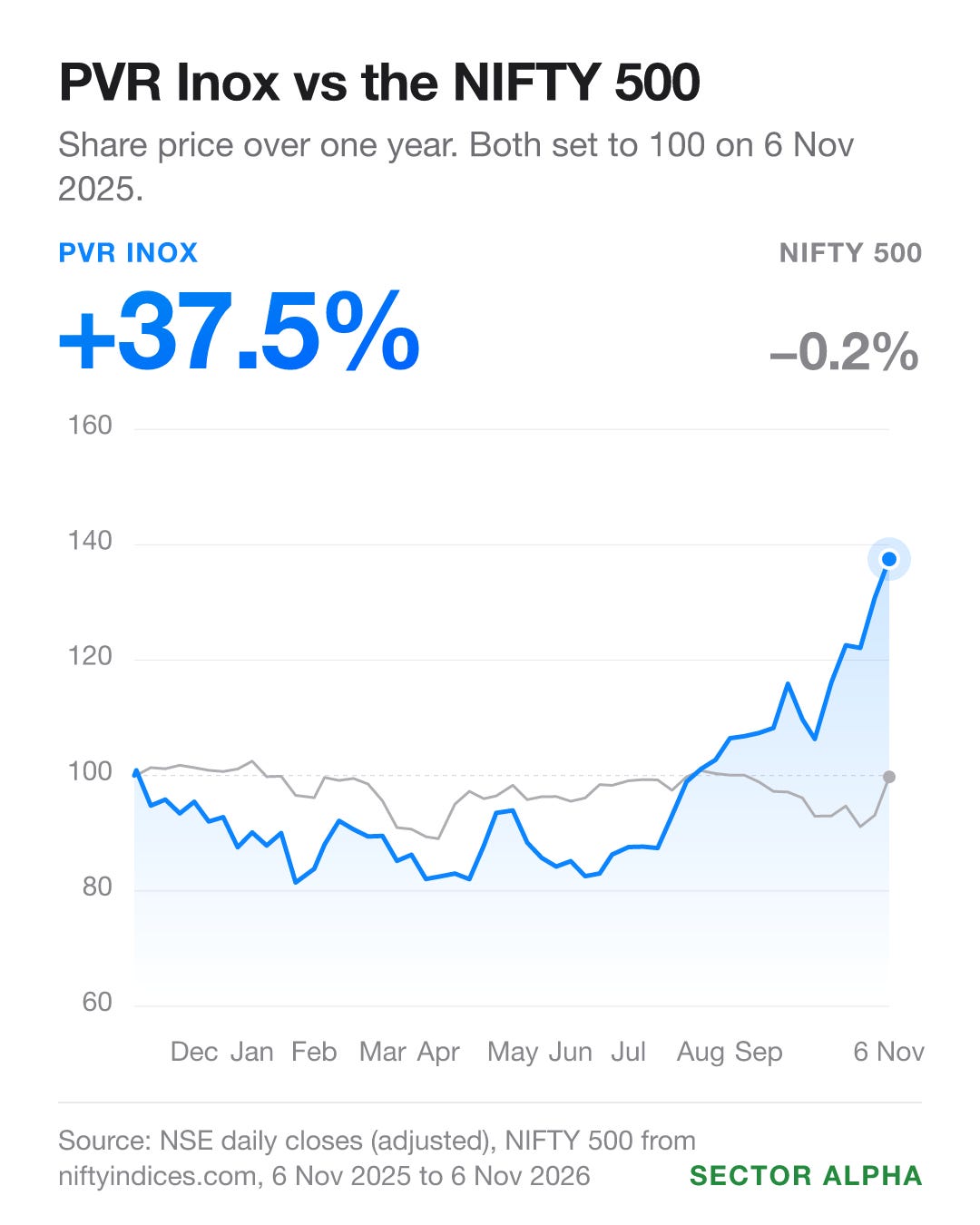
PVR Inox runs cinemas in India and Sri Lanka.
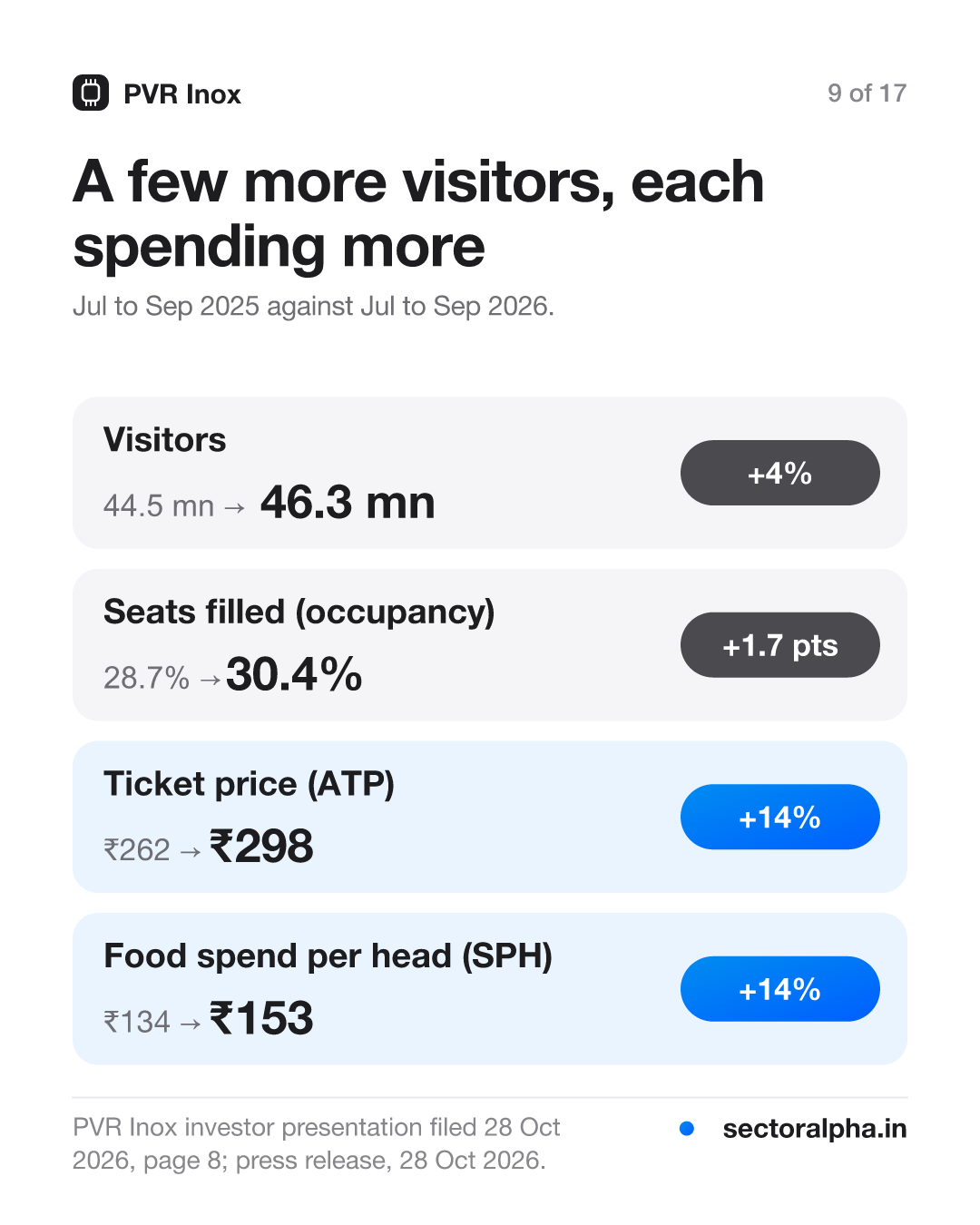
Visitors: up 4%. Spend per visitor: up 14% on tickets, up 14% on food.
That drove July to September.
Share price in a year: PVR Inox up 38%, NIFTY 500 down 0.2%. Last three months: PVR Inox up 36%, NIFTY 500 down 1%.
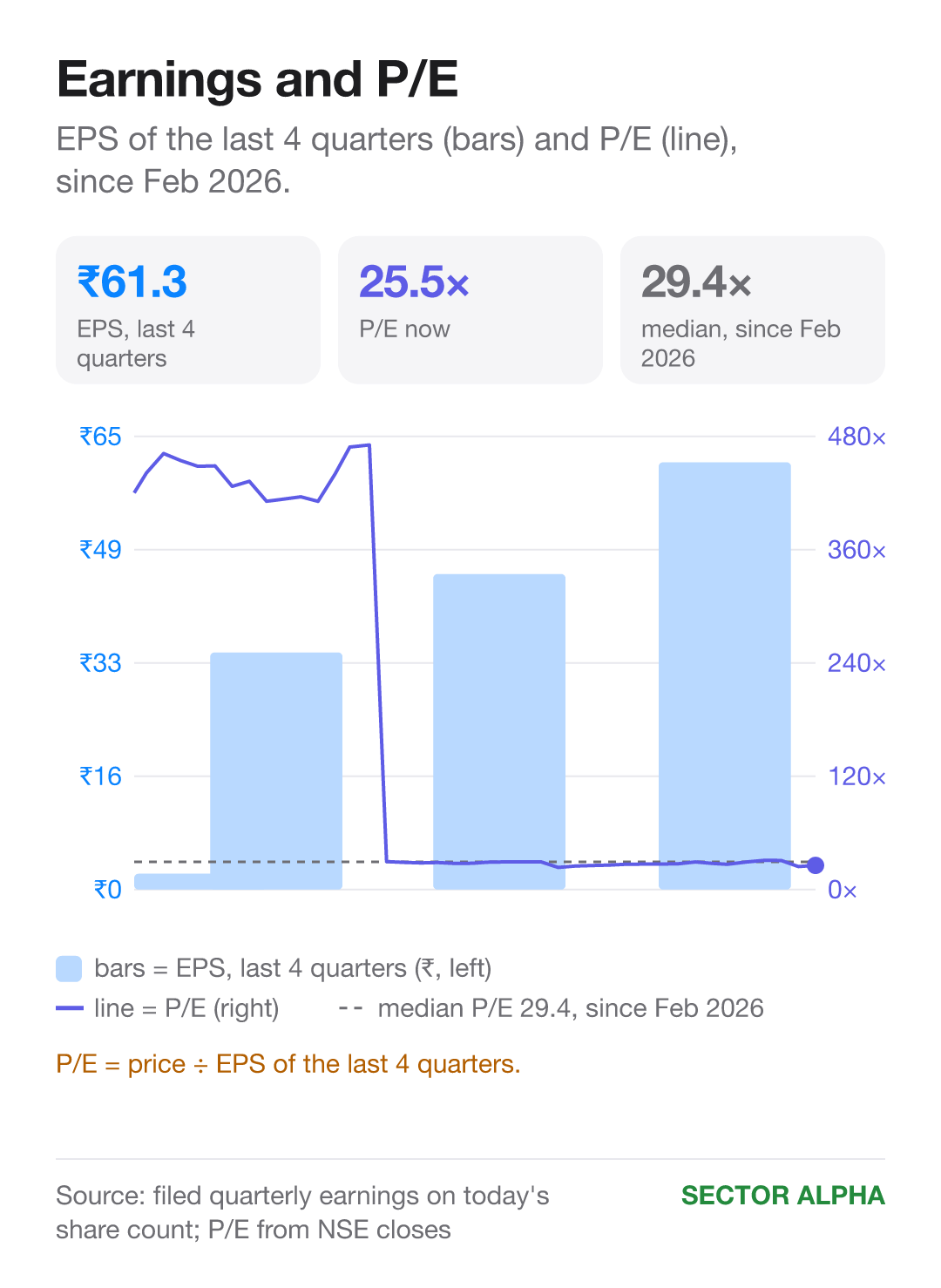
Earnings and P/E
Earnings per share, last 4 quarters: a loss of ₹3.8 → a profit of ₹61.3. From loss to profit. Share price, same year: up 38%.
A year ago there was no P/E (price ÷ earnings per share), because earnings were a loss. On 6 Nov 2026 it was 25.5. It is below that.
One caution: the ₹61.3 includes a one-time gain from selling its snack business, Zea Maize, in January 2026.
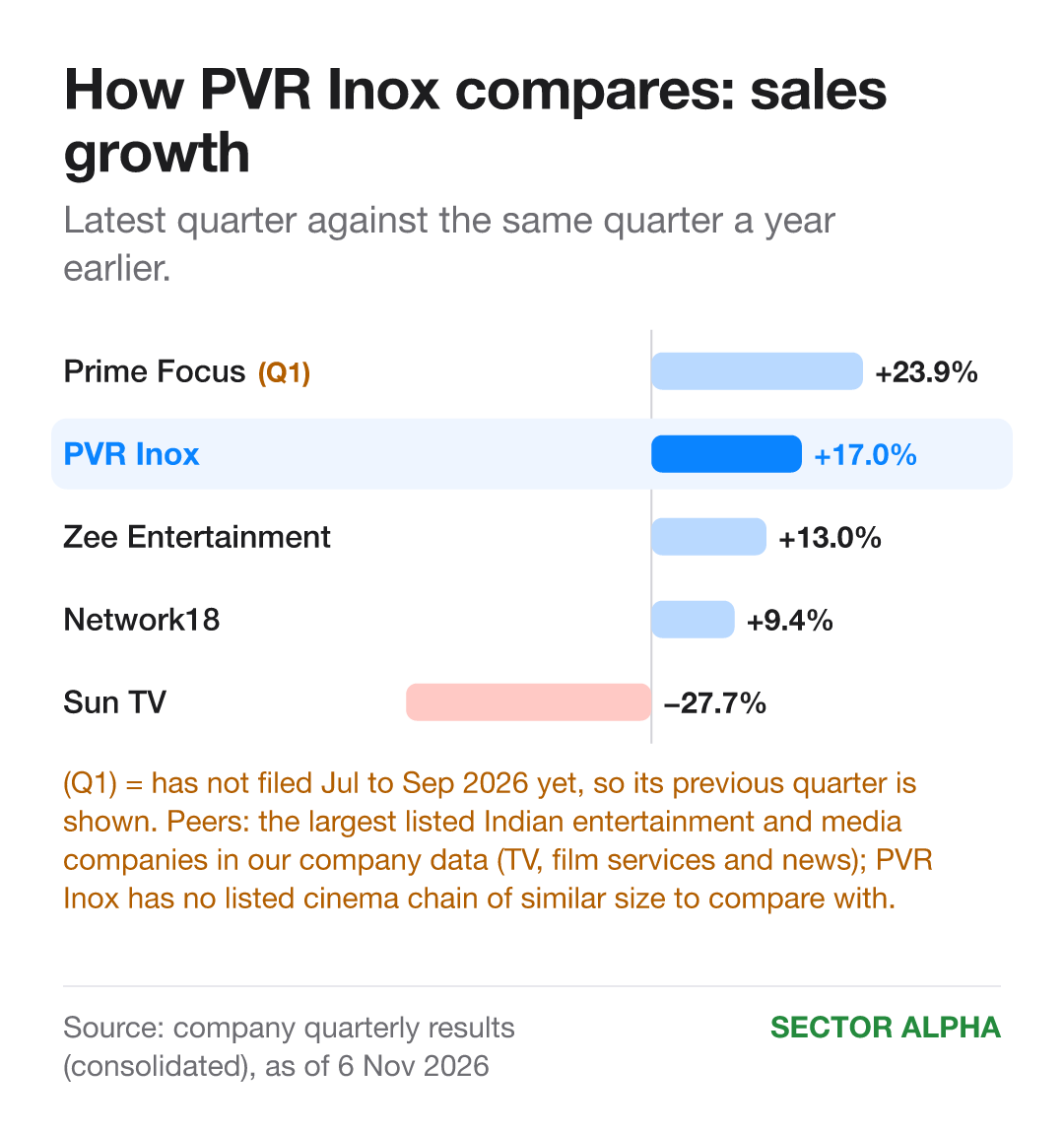
How PVR Inox compares
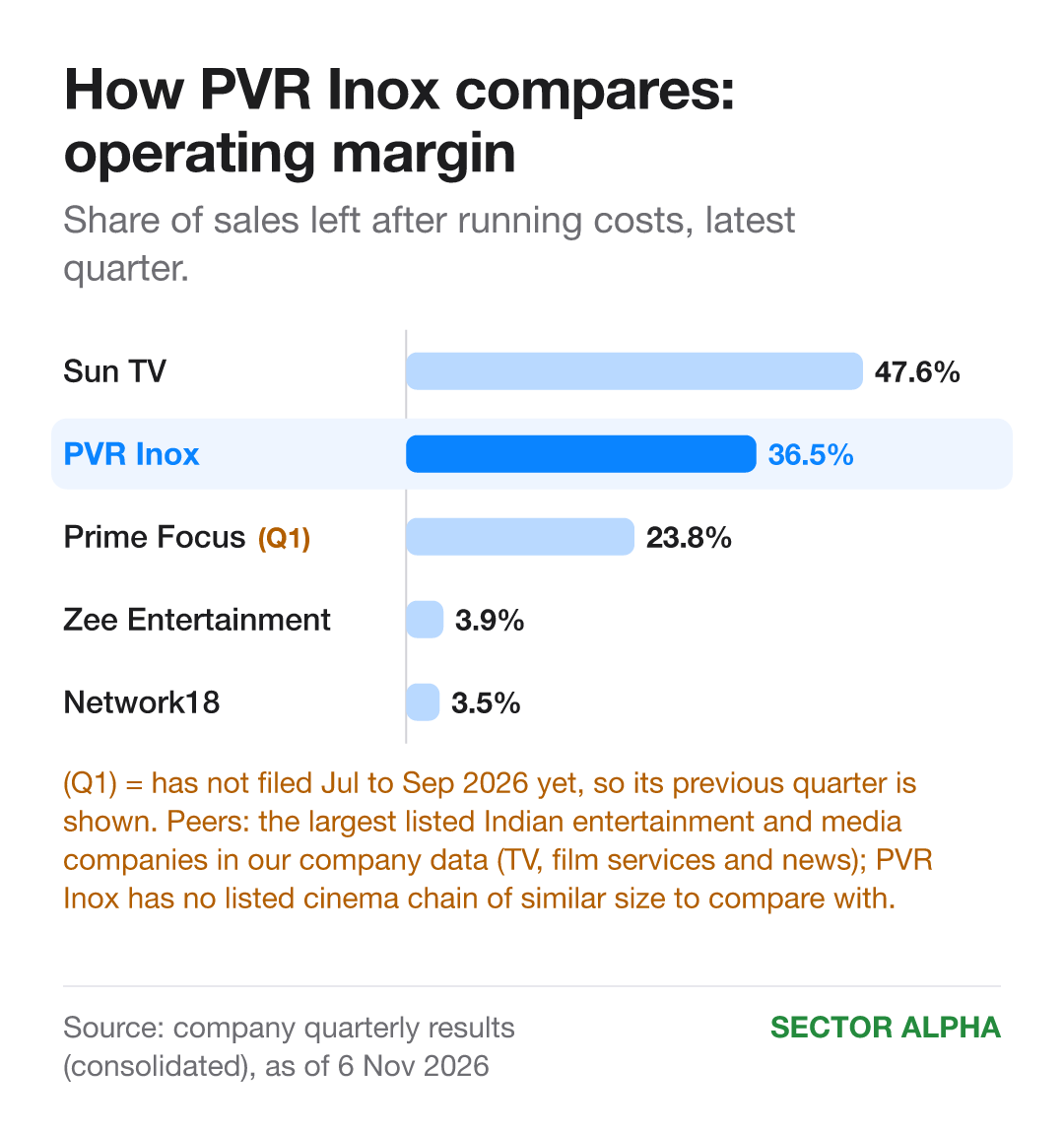
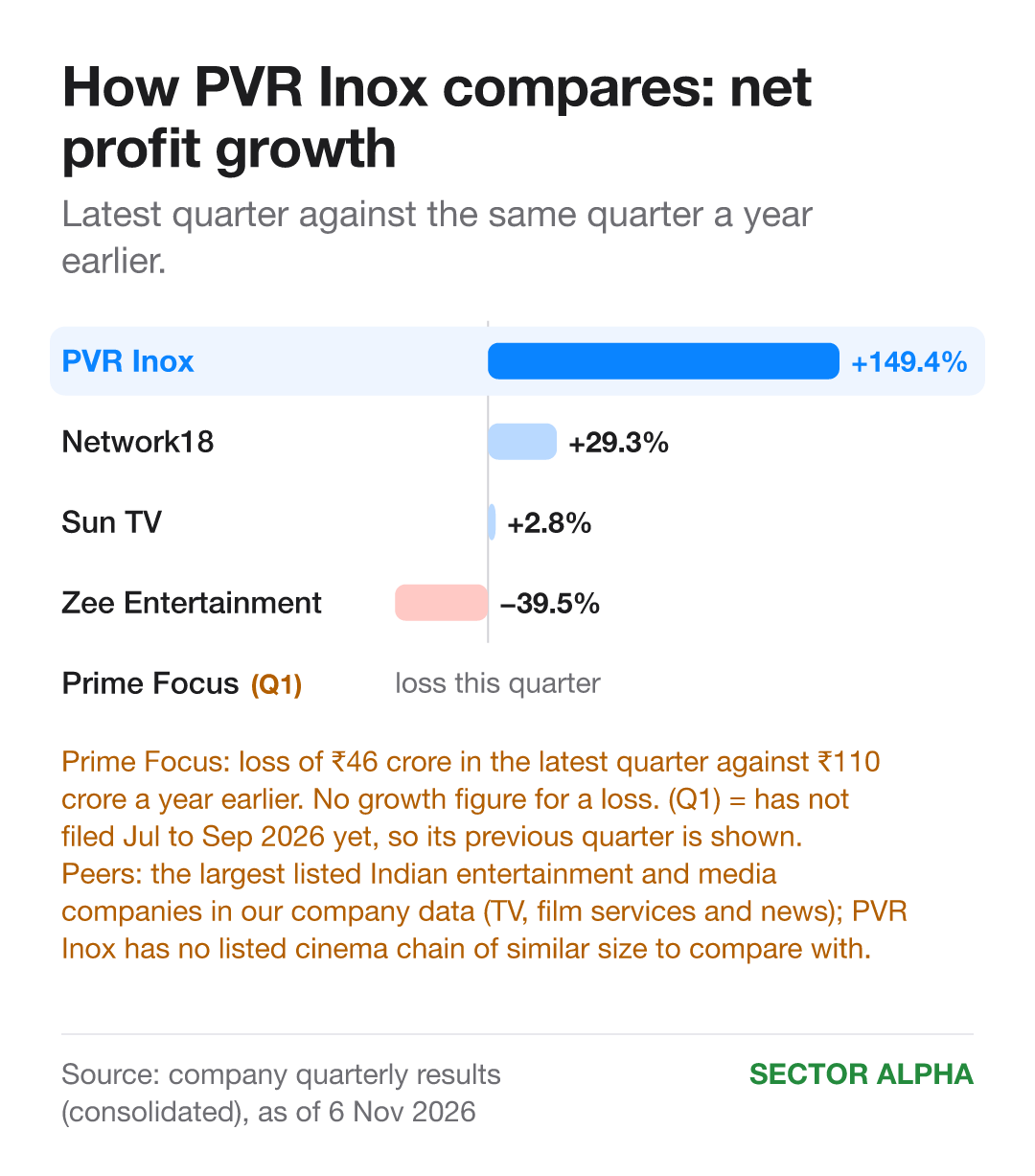
Sales growth: PVR Inox 17%, second, behind Prime Focus. Margin: PVR Inox 36.5%, second, behind Sun TV. Profit growth: PVR Inox 149%, ahead of all 4 others.
No listed cinema chain of its size exists. These peers are TV, film services and news. Prime Focus has not reported July to September yet.
Context: India’s cinemas earned a record ₹4,443 cr in the quarter, up 23%, management said. PVR Inox grew slower, because many hits ran in small towns where it has fewer screens.
The deep dive
What is happening
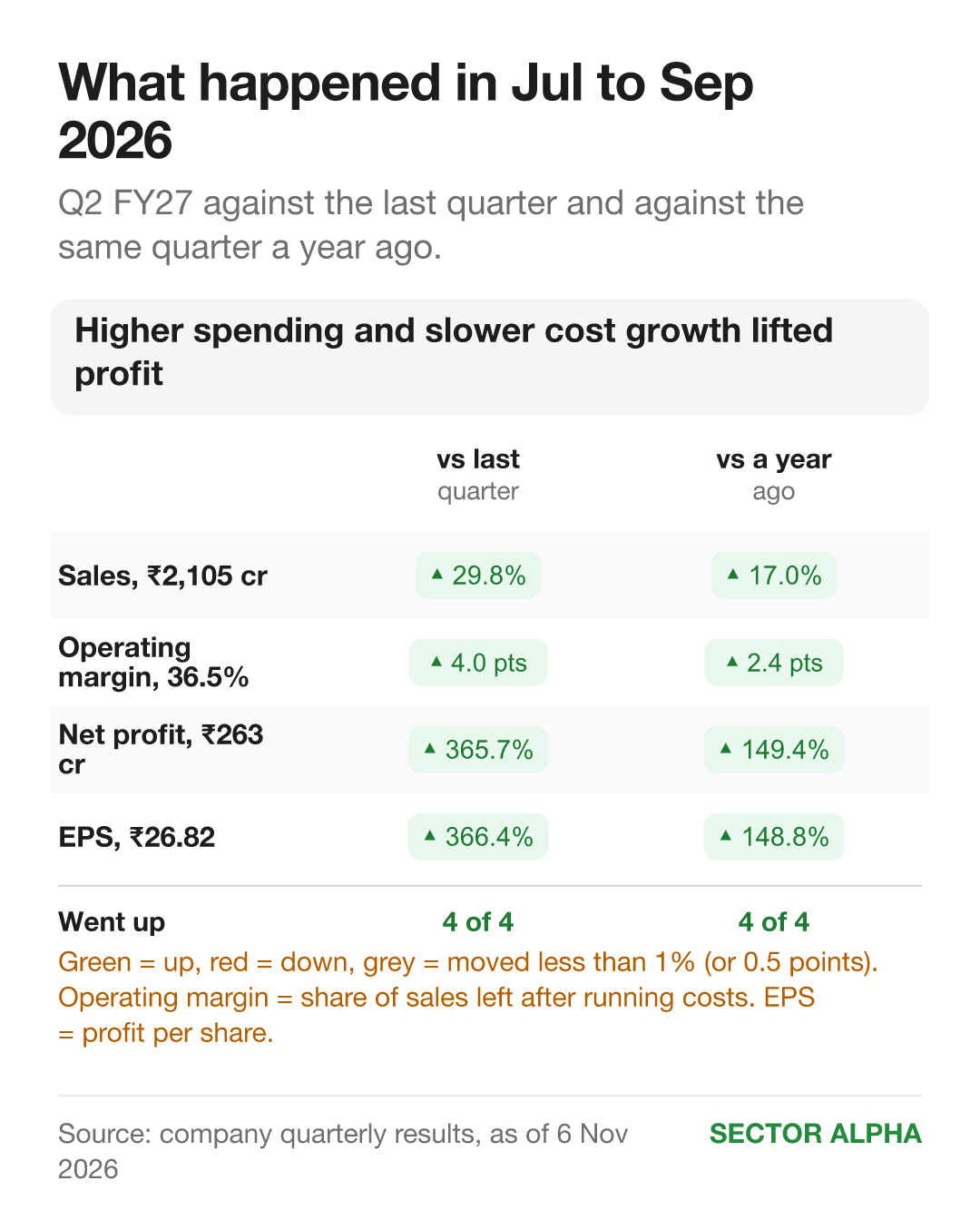
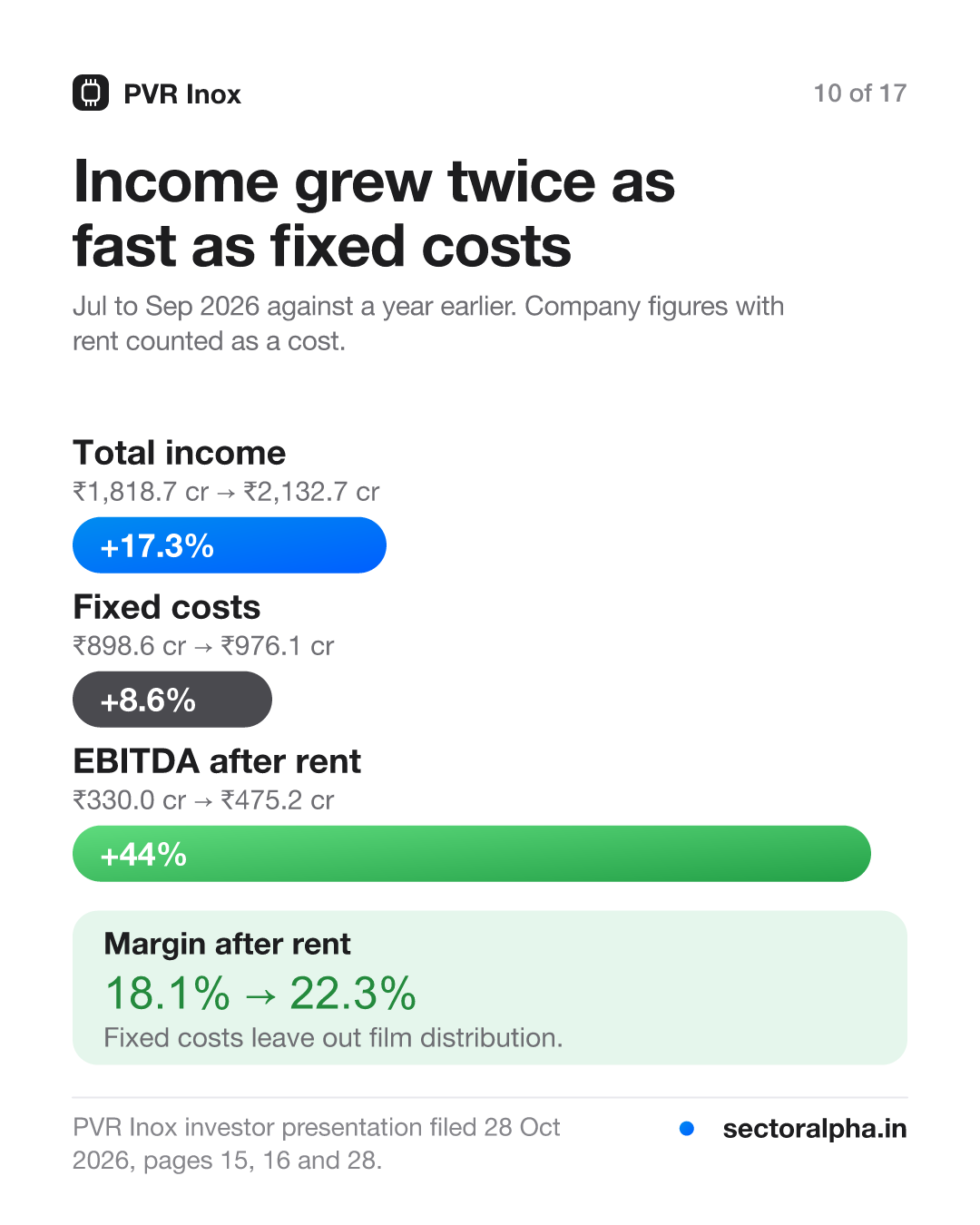
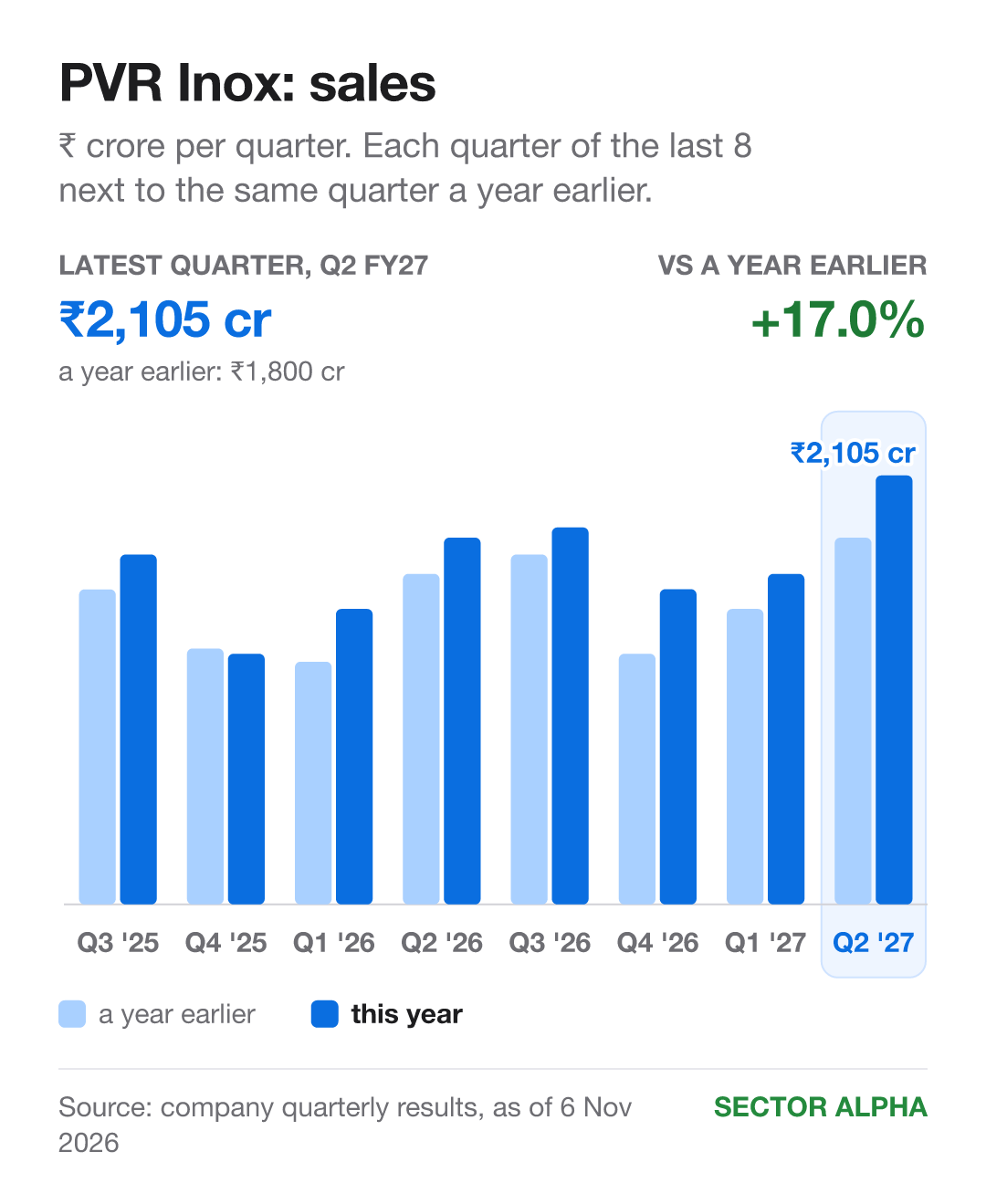
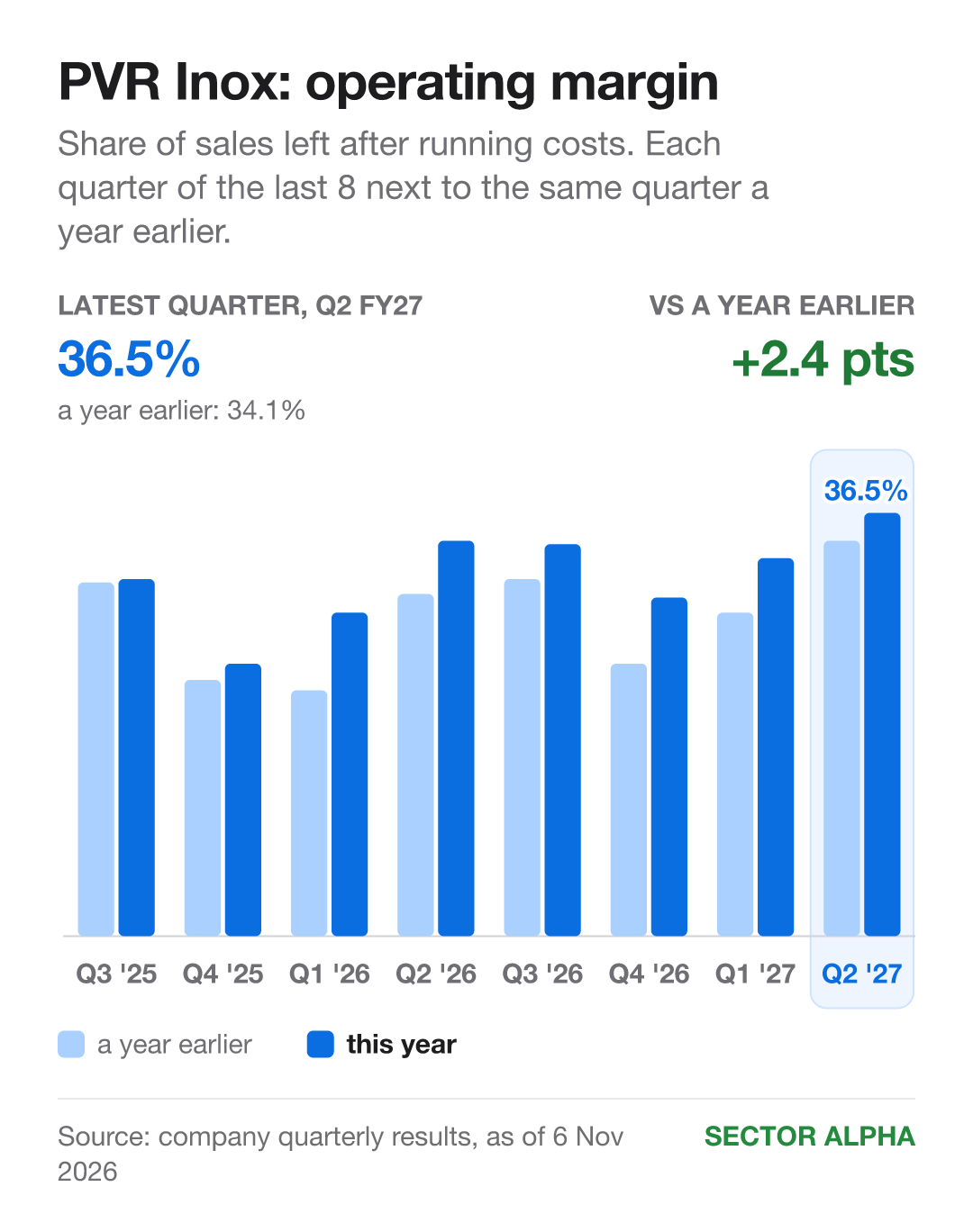
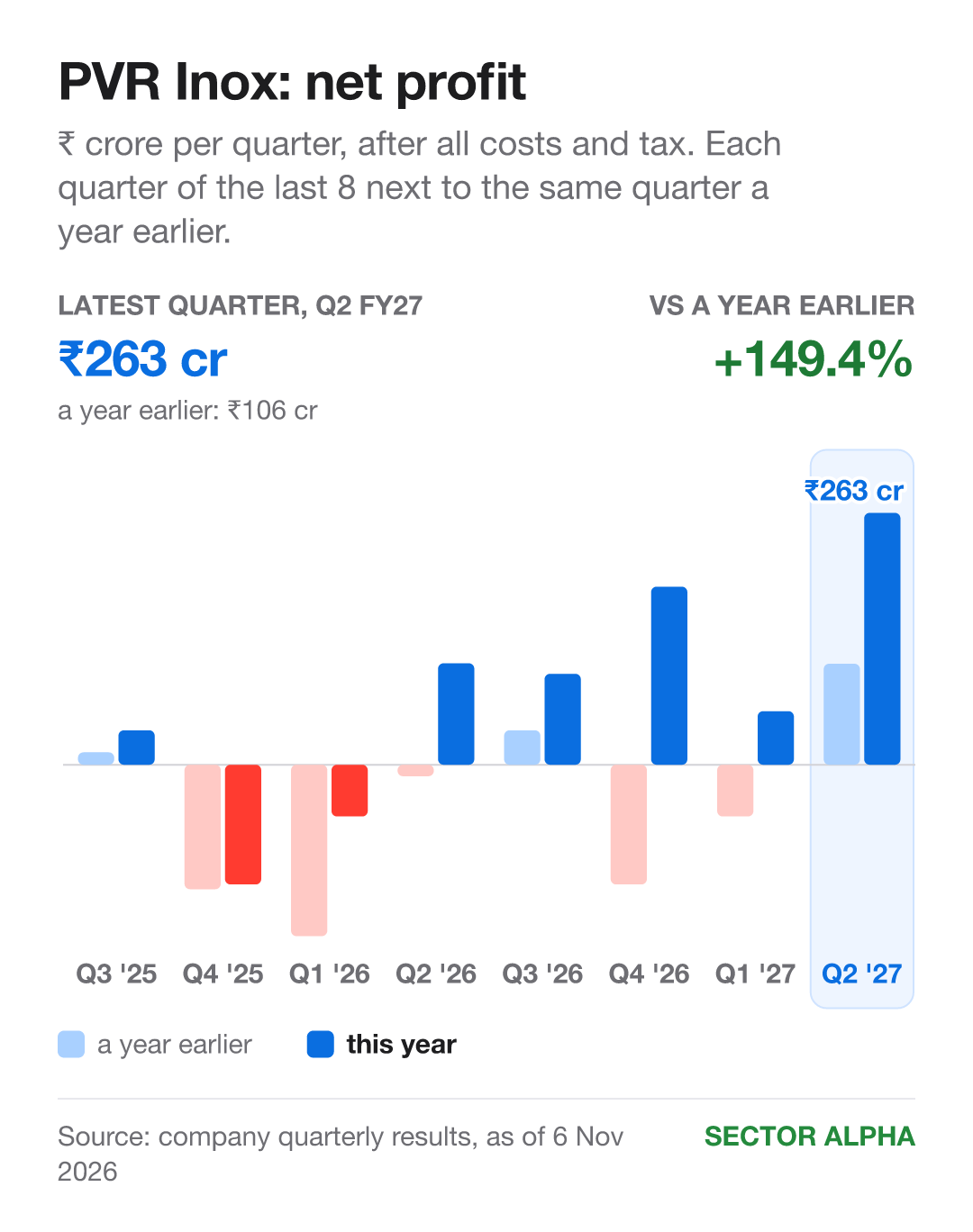
Sales: up 17% on a year ago. Profit: up 149%. Margin after rent, the one that counts for cinemas: 18.1% → 22.3%. (The chart shows 36.5%. That is before rent.)
One accounting help: in July to September 2026, projectors, laptops and desktops were treated as lasting more years. That cut the quarter’s cost by ₹21.1 cr. Another accounting help: money kept aside earlier for costs was released back into profit.
What it makes
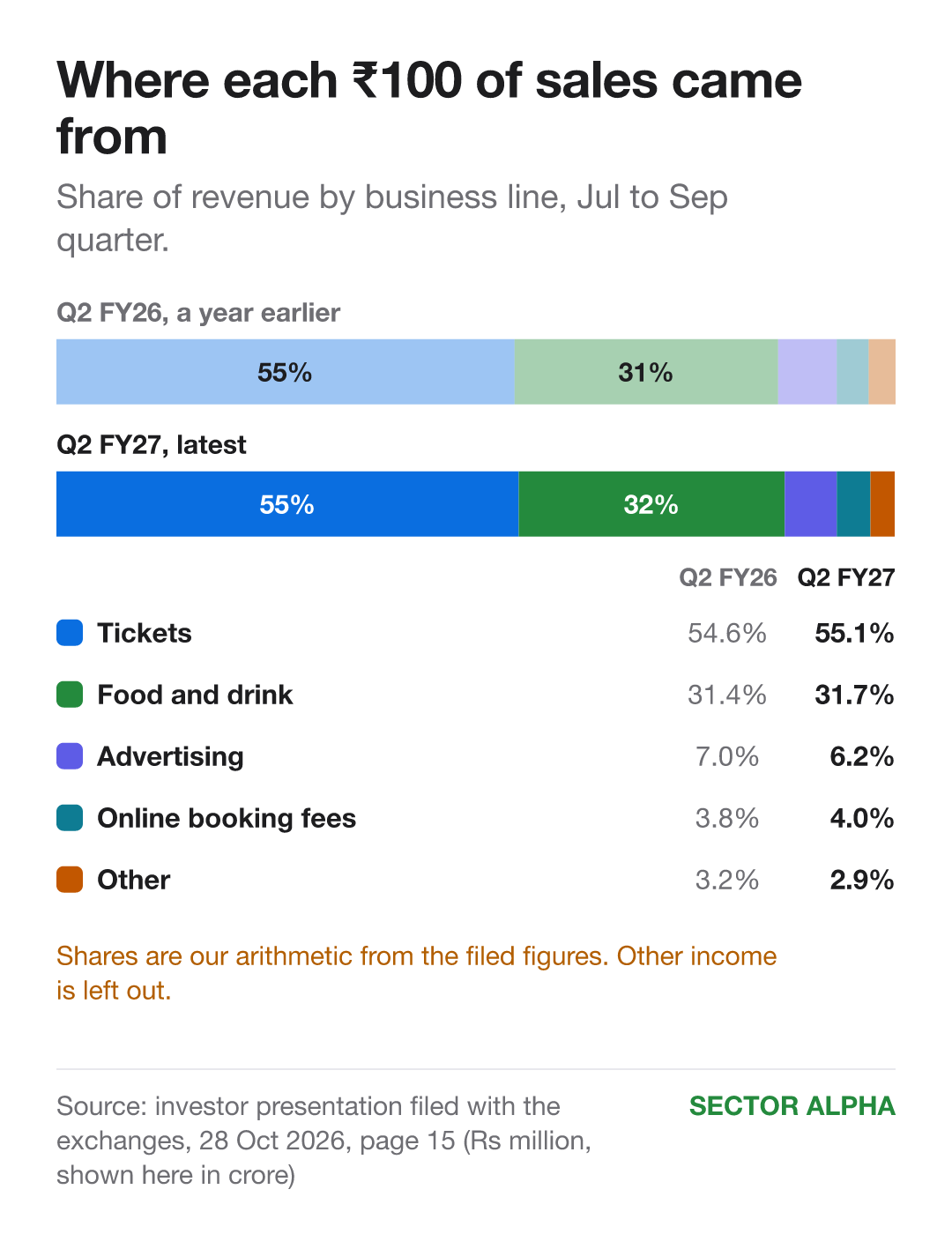
Tickets: 55% of sales. Food and drink: 32%. Advertising: 6%, down from 7%. Online booking fees: 4%.
Size: 1,797 screens in 114 cities, management said.
Why food matters: of every ₹100 of food sold in July to September, about ₹78.5 was left after the cost of the food, by my math.
Each business line
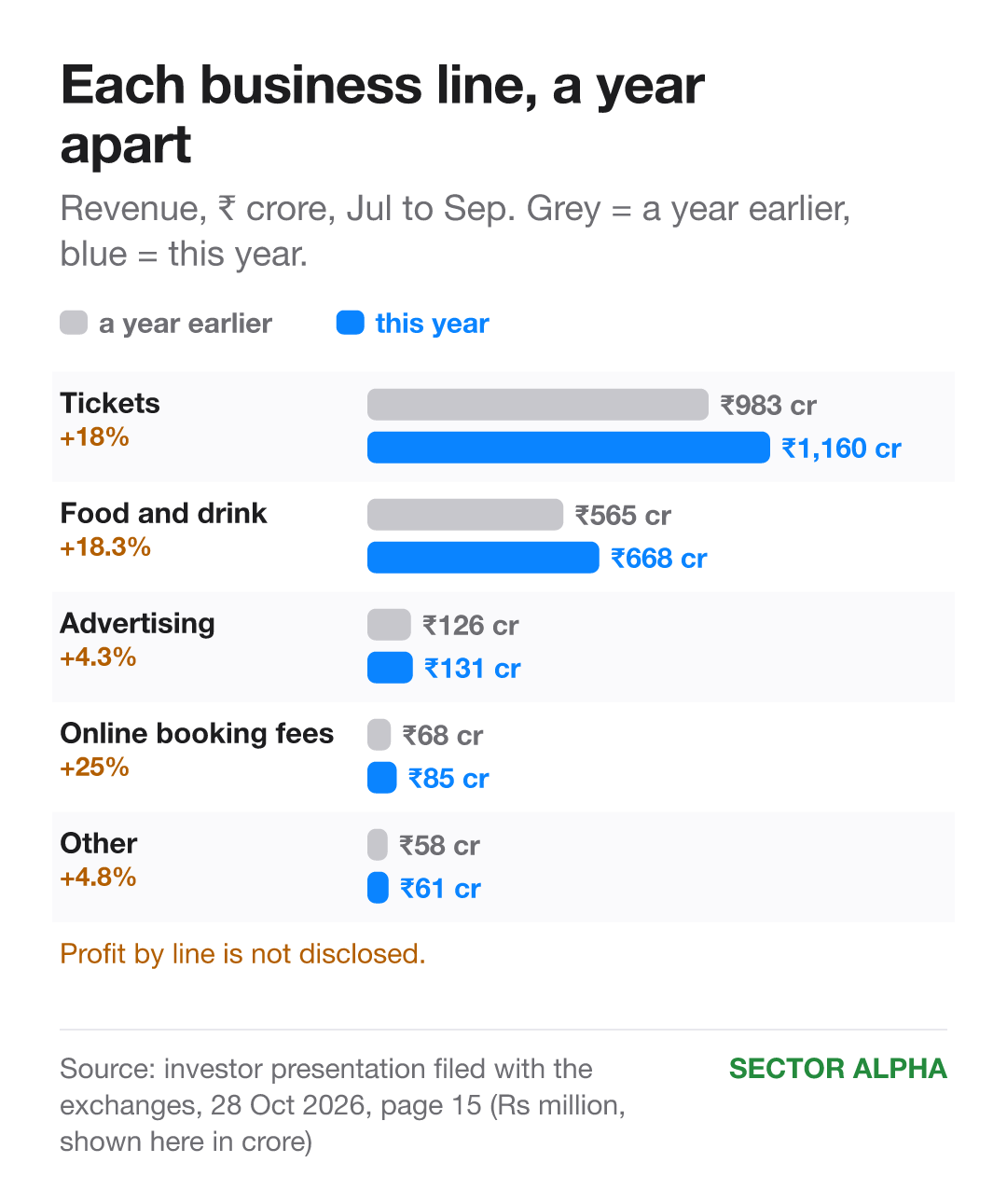
Tickets: up 18%. Food and drink: up 18%. Advertising: up 4%, the slowest. Online booking fees: up 25%, the fastest. Other: up 5%.
Profit by line: not disclosed.
Why advertising lags: it is still below pre-COVID levels. On the 24 Jul call, management said it may take about another year to pass them.
Why sales and profit grew
Visitors: 44.5 million → 46.3 million. Up 4%. Seats filled: 28.7% → 30.4%. Average ticket: ₹262 → ₹298. Up 14%. Food spend per visitor: ₹134 → ₹153. Up 14%.
Why tickets cost more: English films earned 87% more in India, and many played on premium screens like IMAX, which charge more.
Income: up 17%. Fixed costs, like rent and staff: up 8.6%. So profit after rent: up 44%.
Each quarter vs a year earlier
Sales up: 7 of the last 8 quarters. Margin up: 8 of 8. Profit up: 8 of 8.
Why margins keep rising, per management: savings from the PVR and Inox merger, and tighter costs.
Cash and debt
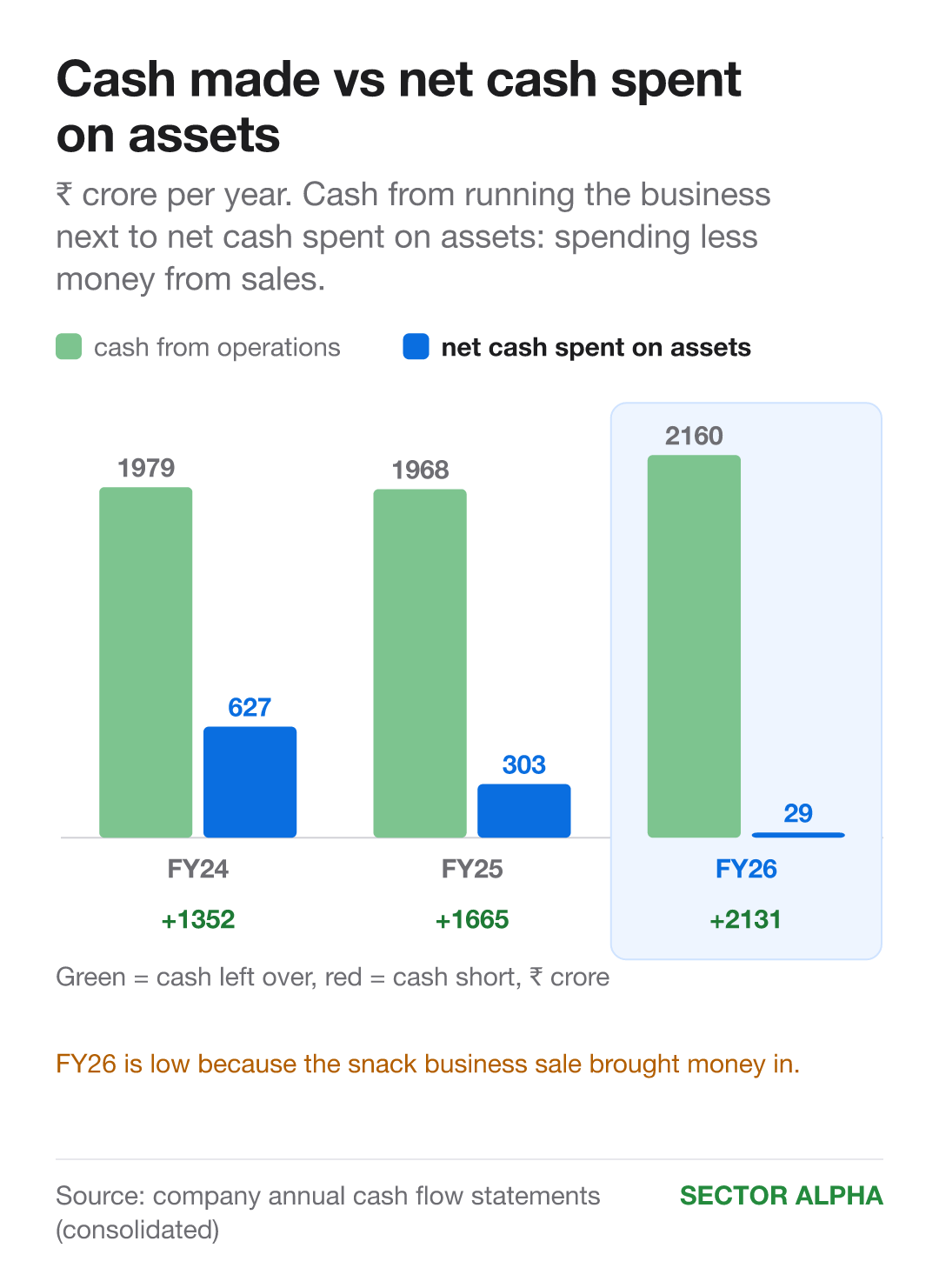
FY26: the cinemas brought in ₹2,160 cr of cash. Net spending on assets: ₹29 cr, low because the snack business sale brought money in. FY25: ₹1,968 cr in. ₹303 cr spent. FY24: ₹1,979 cr in. ₹627 cr spent.
Note: these cash numbers do not take out rent.
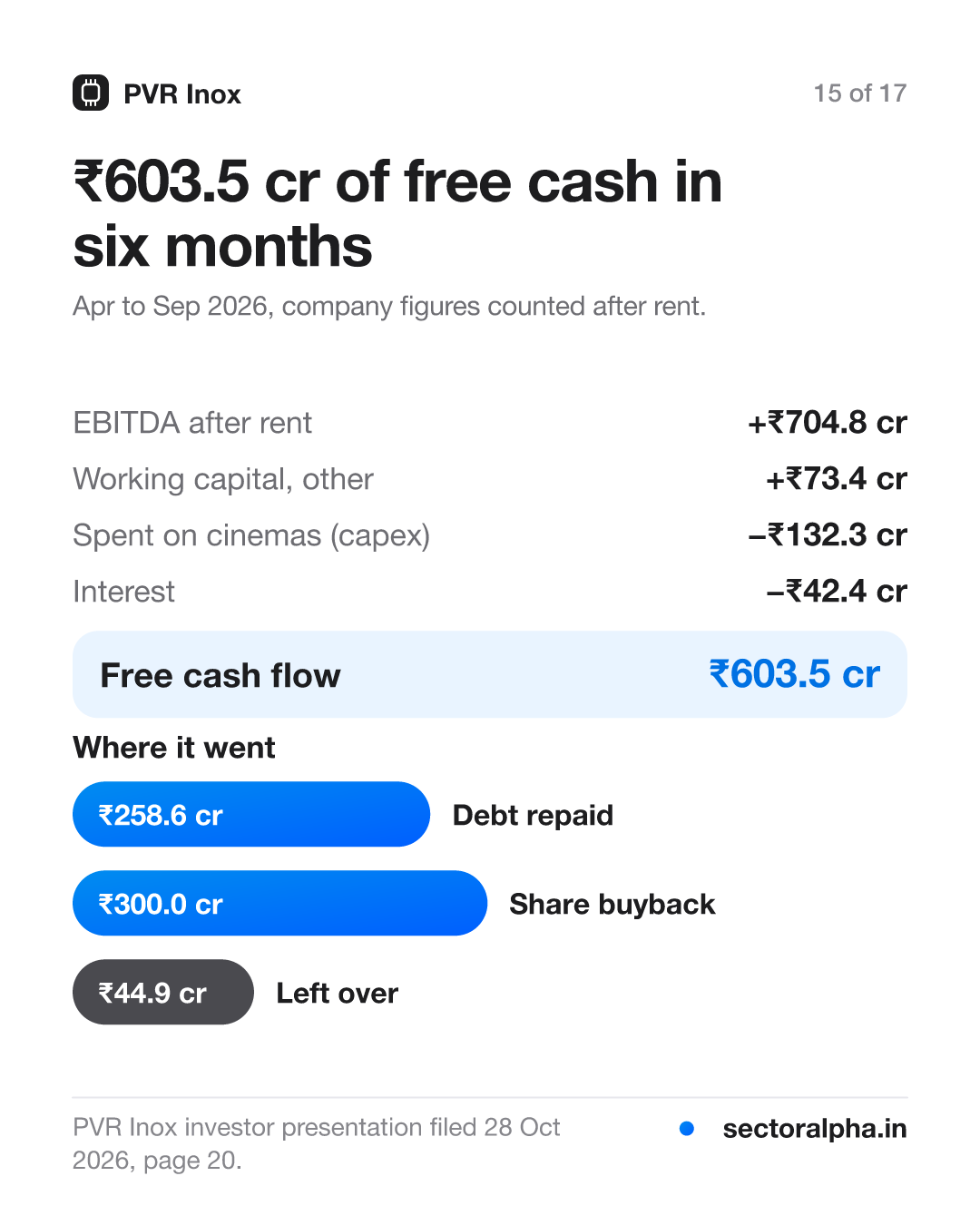
April to September 2026: ₹603.5 cr left after rent, spending and interest. Used for: ₹258.6 cr of loans repaid, and a ₹300 cr share buyback.
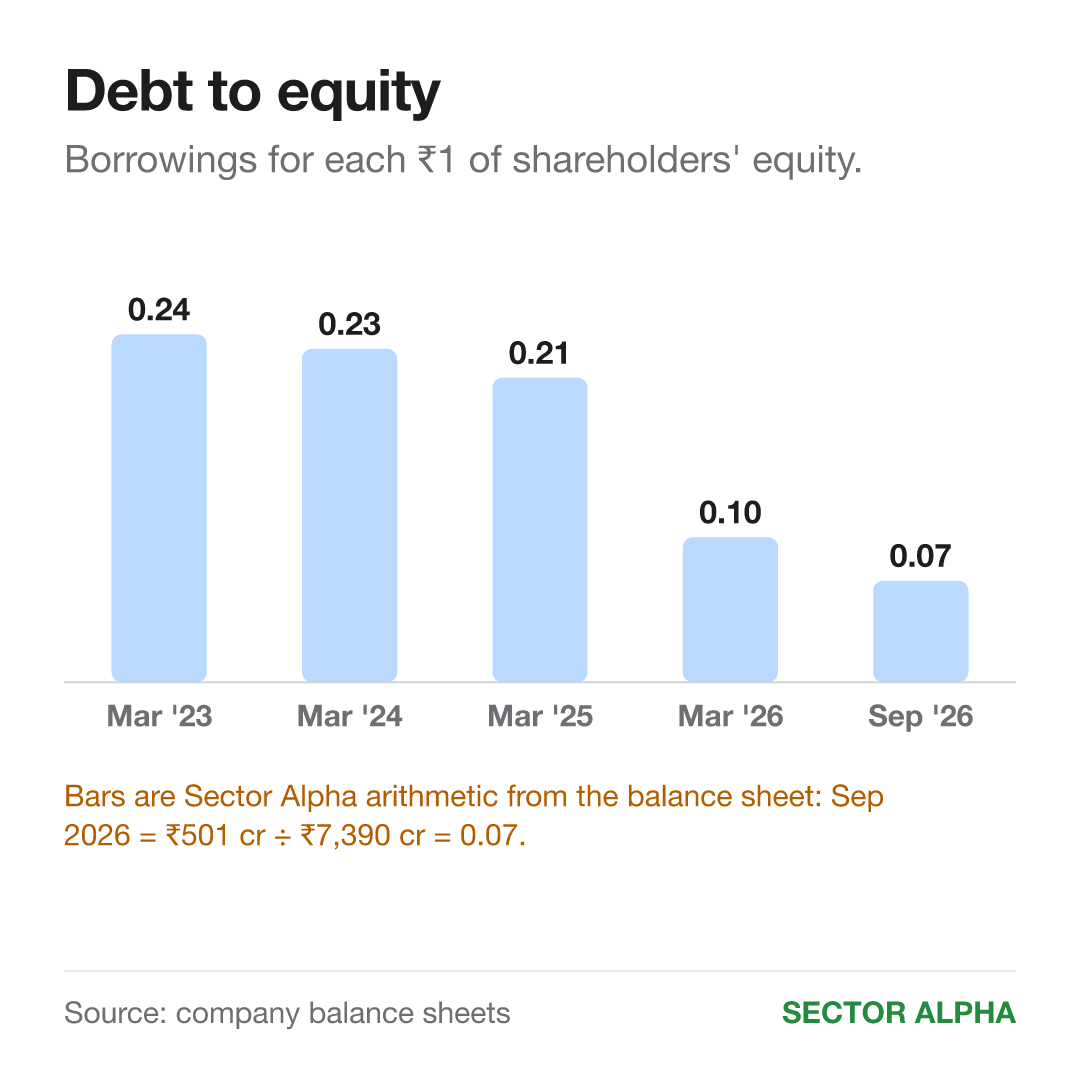
Debt: ₹758.6 cr → ₹500.9 cr, March to September 2026. Debt to equity (debt ÷ shareholders’ money): 0.10 → 0.07. On 30 Sep 2026, cash exceeded debt by ₹140.7 cr. Cinema lease obligations, ₹5,807.9 cr, are counted separately.
New rule from management: give back about 30% of each year’s spare cash to shareholders, and keep debt, after cash, below half a year’s operating profit.
What management said, what happened
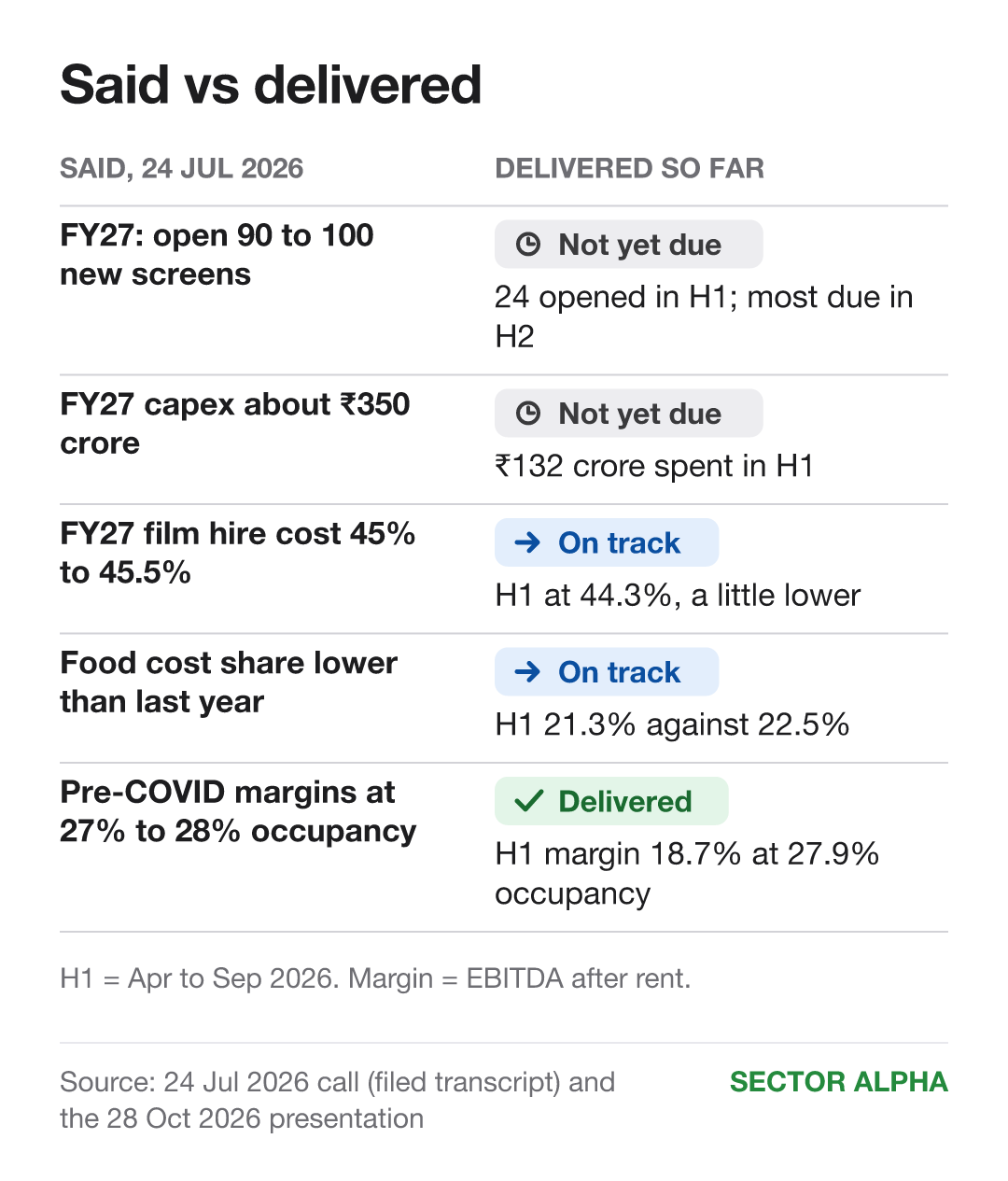
From the 24 Jul 2026 call. 1 promise delivered, 2 on track, 2 not due yet.
Three older promises slipped. New screens: in February, management talked of about 150 for FY27. In July it cut that to 90 to 100. Smart Cinemas, a cheaper format for small towns: two were due by mid-July. The first opened in September. Smart Cinema cost: in May, at least 30% to 40% cheaper to build than a normal cinema. In October, 25% to 30%.
Why is this happening
Both quotes come from the 24 Jul 2026 call.
Big English films: they played on premium screens that charge more.
Merger savings: PVR and Inox are still cutting overlapping costs.
So we are saying that even at lesser occupancy levels, even at say, 27%, 28%, we should be able to achieve the margins that we were achieving earlier. Ajay Kumar Bijli, Managing Director, on the 24 Jul 2026 call
Earlier margins could be achieved with a lower share of seats filled.
Overall, it will be in the ballpark of INR350 crores for the year. Gaurav Sharma, Chief Financial Officer, on the 24 Jul 2026 call
FY27 spending on cinema assets was expected to be about ₹350 crore.
What to track
Spending on cinema assets: ₹300 to ₹330 cr for FY27, management said on the 28 Oct call, down from about ₹350 cr in July.
Film hire cost: the share of ticket sales paid to producers, 45% to 45.5%.
Food cost share: below the earlier 22.5%.
Margin after rent: near 22.3%.
New screens: 90 to 100 in FY27, 24 opened by September 2026.
Smart Cinemas: two or three more in FY27, management said on the 28 Oct call.
Every quarter and every call for PVR Inox is on its page: sectoralpha.in/stocks/pvr-inox-ltd
— Roshan, Sector Alpha