


Not SEBI registered. Not investment advice. For your own research only.

Shilpa Medicare makes medicines and the active ingredients inside them.
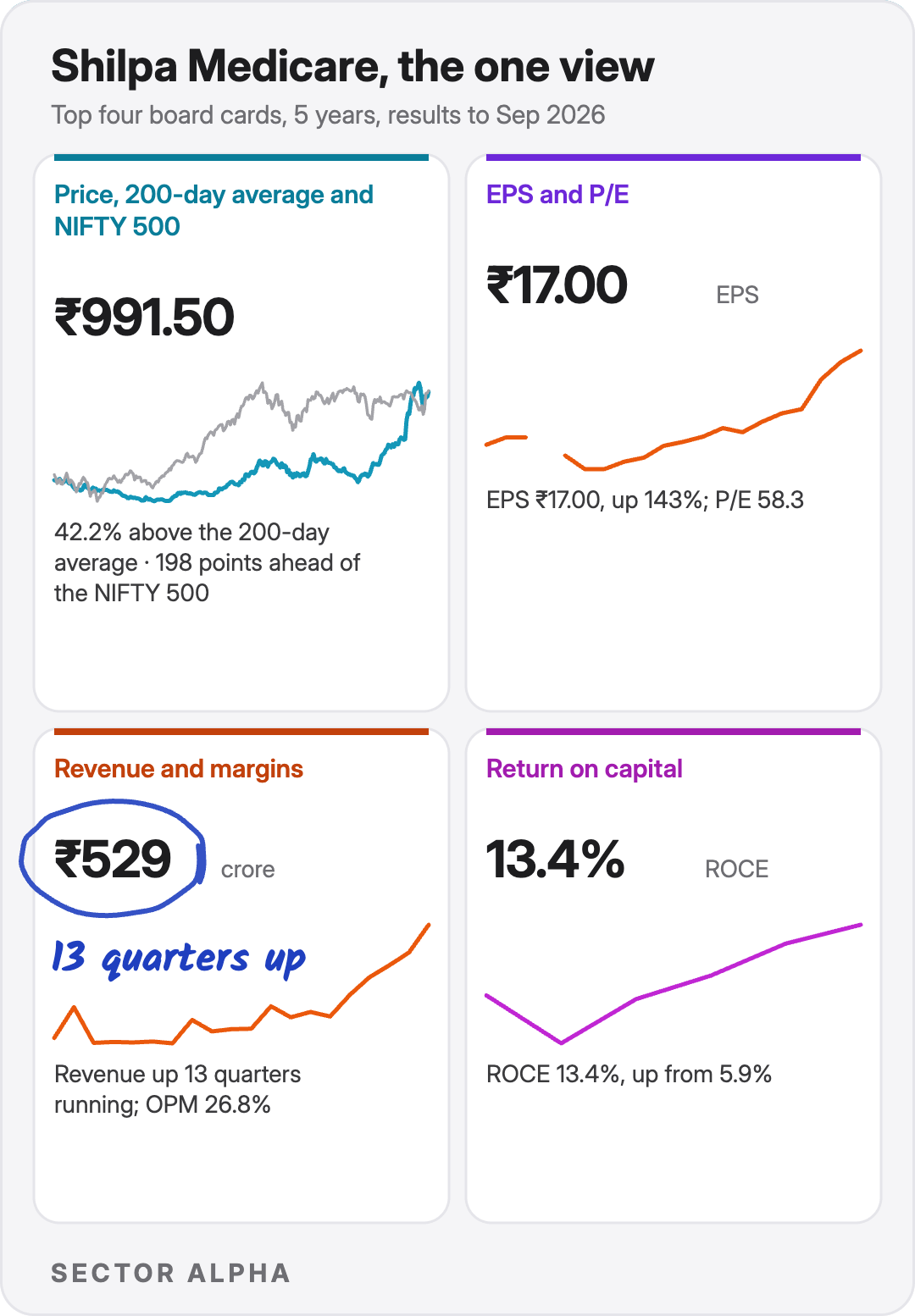
In Jul to Sep 2026 all four of its businesses grew at once, and management called it the best quarter in its history.
The reason, in management’s words on 5 Nov 2026: the years of building plants ahead of sales are over, and those plants are now filling up.
The catch: the business that grew fastest earns the thinnest margin, so profit did not keep pace with sales.
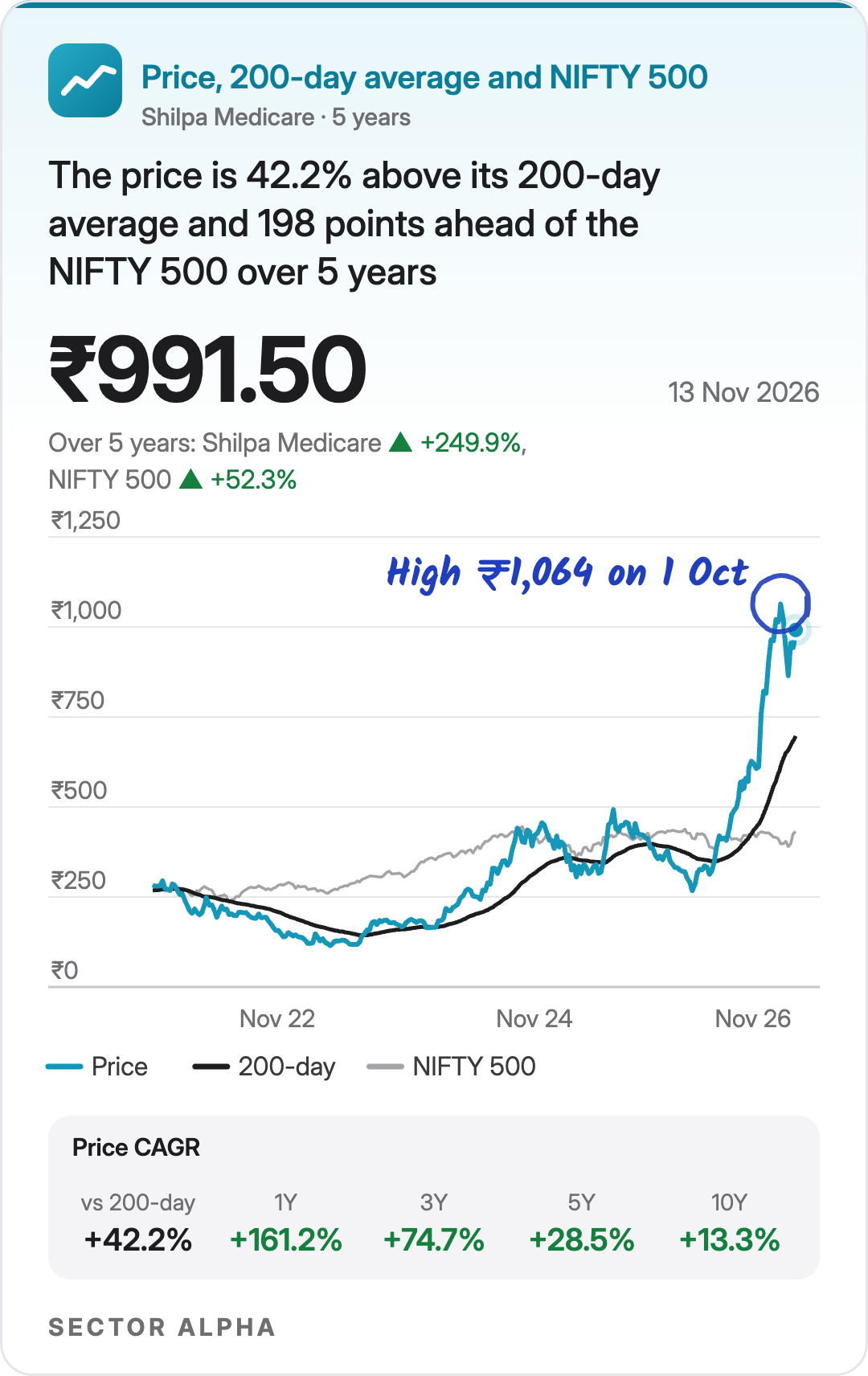
Shilpa Medicare’s share price rose 161.2% from 14 Nov 2025 to 13 Nov 2026; the NIFTY 500 fell 0.4%.
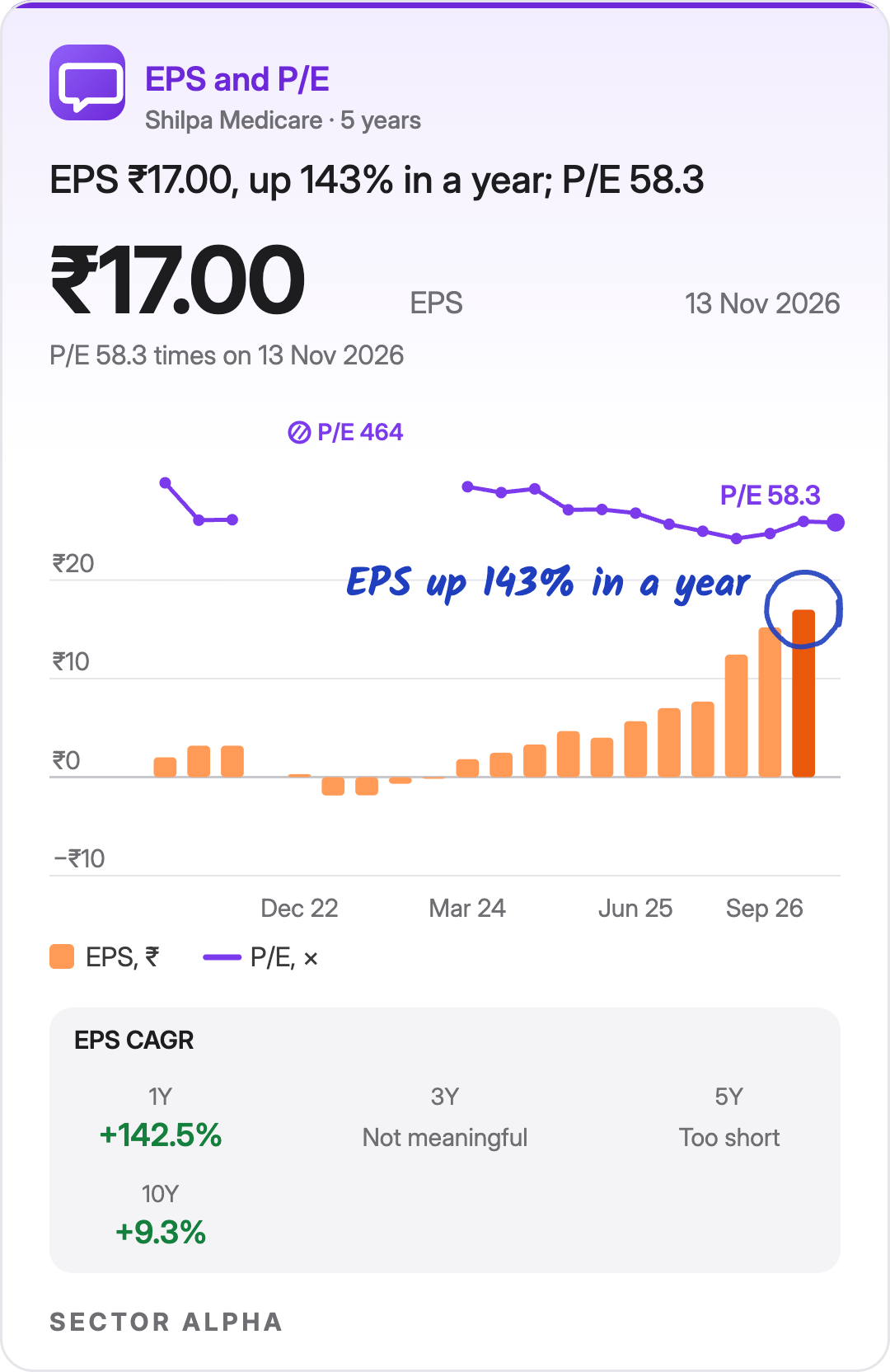
Earnings and P/E
Earnings per share, last four quarters to Sep 2026: up 143%.
Share price, 14 Nov 2025 to 13 Nov 2026: up 161.2%.
The price rose a little faster than earnings, so P/E went from about 54 on 14 Nov 2025 to 58 on 13 Nov 2026.
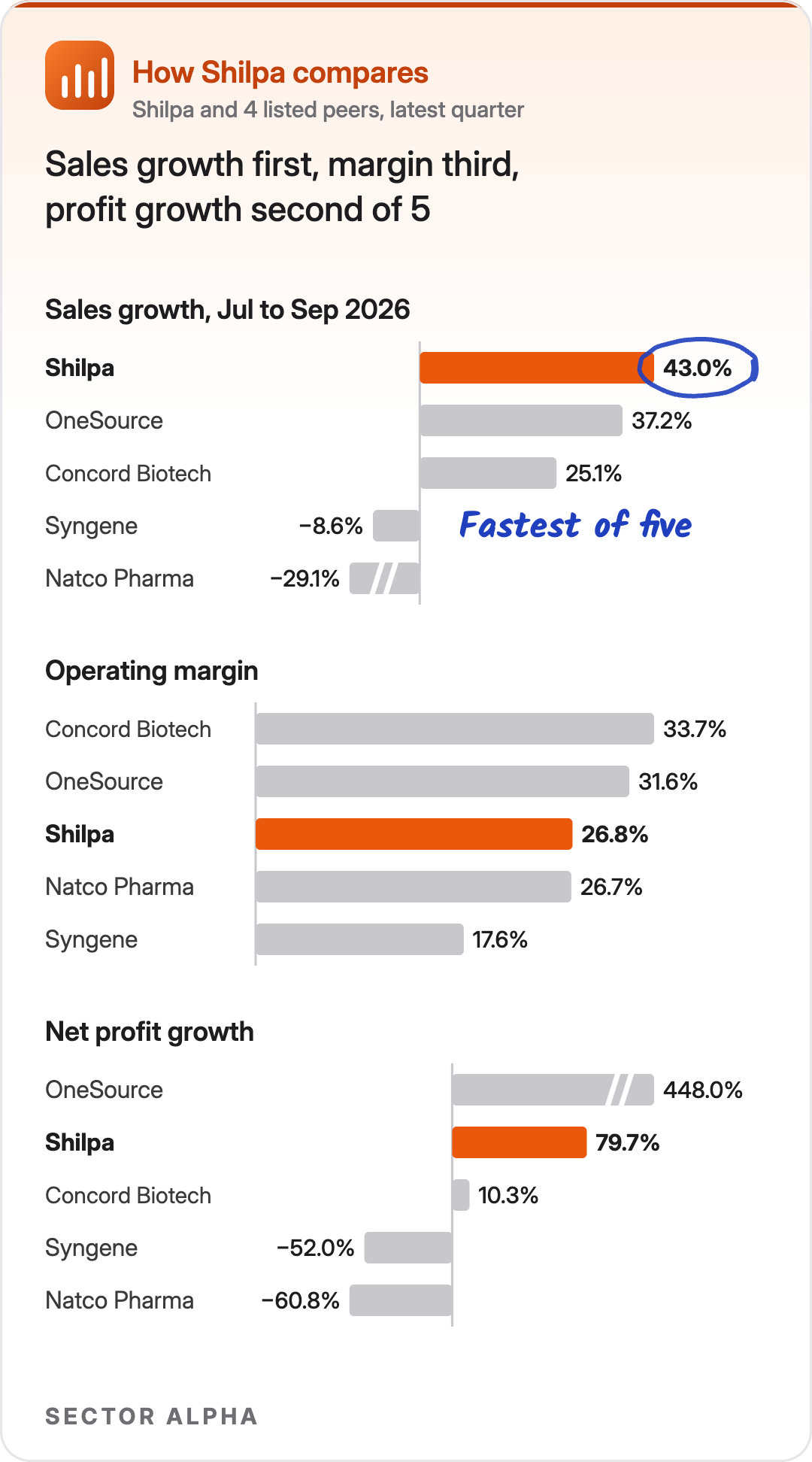
How Shilpa compares
I compare Shilpa with Natco Pharma, OneSource, Syngene and Concord Biotech, using Jul to Sep 2026 results for all five.
Fastest sales growth of the five. Natco and Syngene sold less than a year earlier.
Second in profit growth, behind OneSource.
Third in margin, behind Concord Biotech and OneSource. Shilpa’s margin slipped in Jul to Sep 2026 for the reasons below.
The deep dive
What is happening
Sales rose against both Apr to Jun 2026 and a year earlier. Profit rose on a year but fell against Apr to Jun 2026. The margin got thinner. Management gave these reasons on the 5 Nov 2026 call:
New plants filling up. Ingredient sales hit a record, from customers taking more of key products made in newly expanded plants.
Complex medicines in Europe. Finished medicine growth came mostly from complex products sold in Europe, helped by the US and other markets.
Thinner margin from the mix. Ingredients earn less on each sale than finished medicines. Ingredients grew strongly, so the average margin fell.
Costlier raw materials. Raw material prices for ingredients went up worldwide.
Why profit fell against Apr to Jun 2026: tax. Apr to Jun 2026 had a tax credit, which the CFO said on 5 Aug 2026 came from reversing a deferred tax liability. Jul to Sep 2026 carried a normal tax charge. The core business did not cause it: operating profit was a little higher.

What it makes
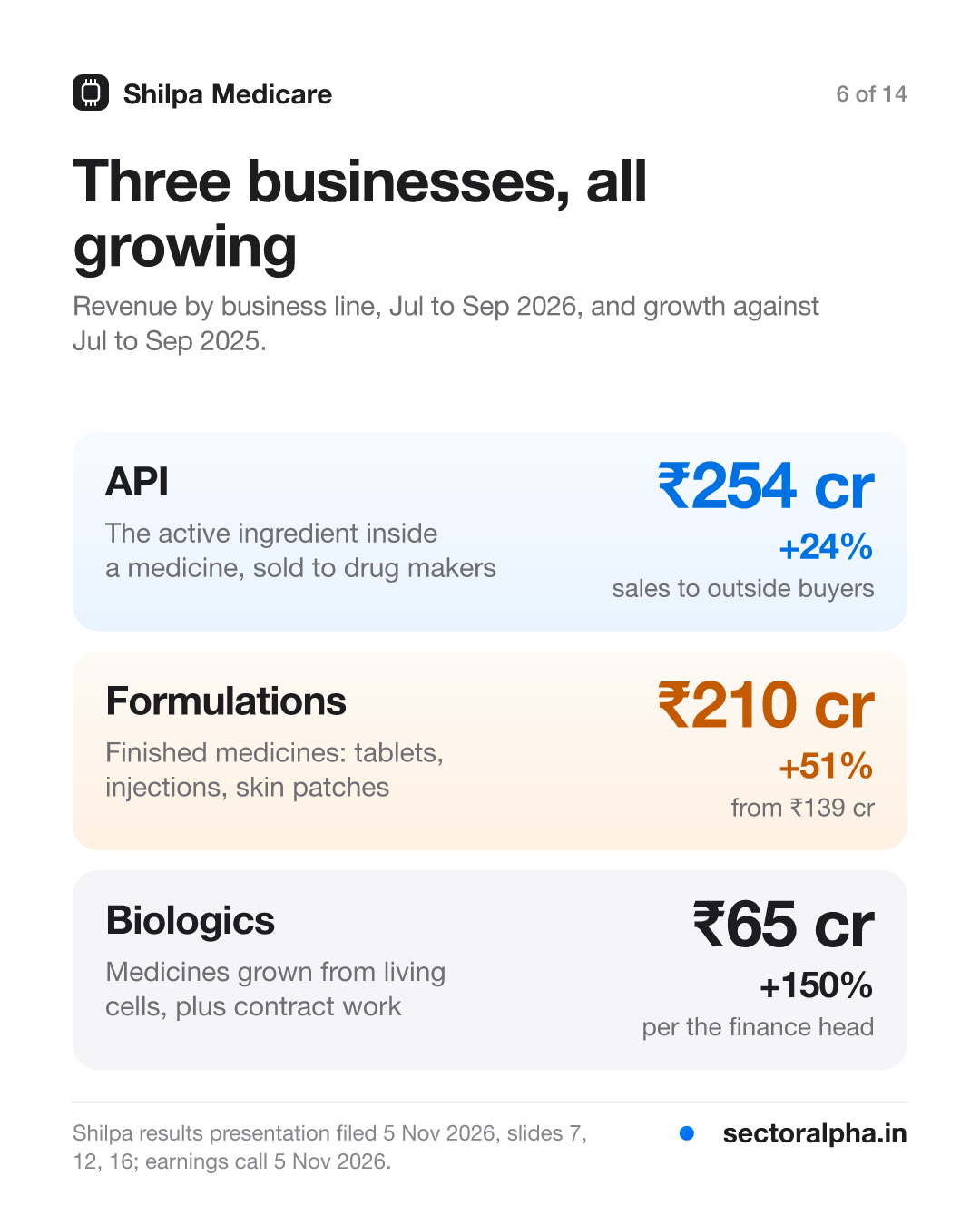
Shilpa reports three businesses. Management counts contract work, inside ingredients, as a fourth:
Ingredients (API): the active ingredient in a medicine, sold to other drug makers. It also makes ingredients under contract for other companies’ new drugs.
Finished medicines: tablets, injections, skin patches and mouth-dissolving films.
Biologics: medicines grown from living cells, including close copies of branded ones (biosimilars).
Why each one grew in Jul to Sep 2026, per management on 5 Nov 2026:
Ingredients: customers bought more from the newly expanded plants, and contract work held steady.
Finished medicines: complex products in Europe drove it. In India, sales grew 2.5 times in Apr to Sep 2026, led by Nor-UDCA, a fatty-liver drug Shilpa says it launched first in the world.
Biologics: licensing deals, partnerships and contract work. It made up about 12% of sales in Jul to Sep 2026.
Each quarter vs a year earlier
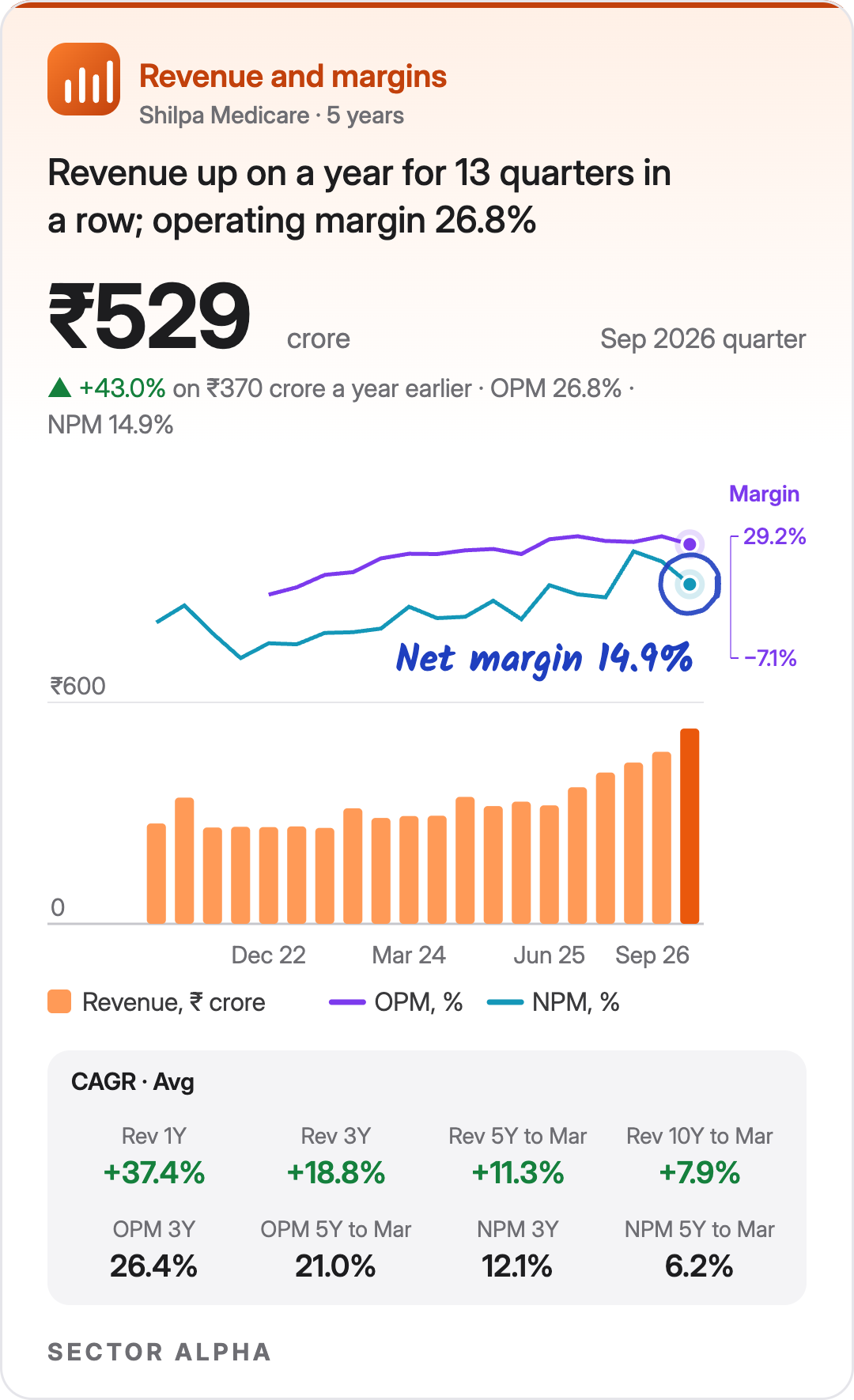
Sales: up on a year in each of the last eight quarters. The lever is new capacity being filled across all four businesses.
Margin: up on a year in six of the last eight. The latest miss, Jul to Sep 2026, came from more ingredient sales and costlier raw materials.
Profit: up on a year in seven of the last eight.
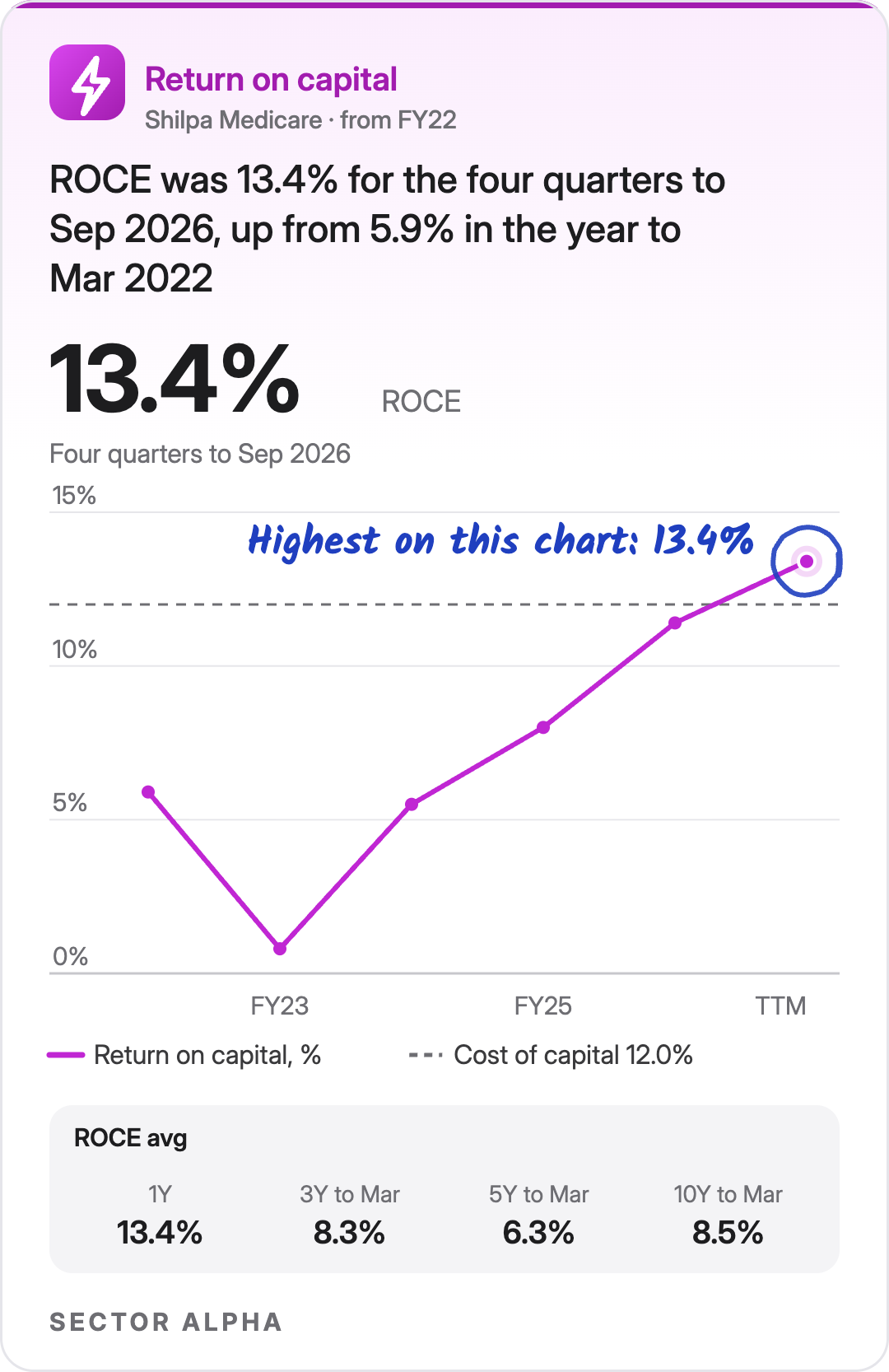
Returns: the return on money invested has risen every year since FY23. Management’s reason: more sales running through plants that are already built. It expects returns to keep improving as plants fill.
Where the money goes
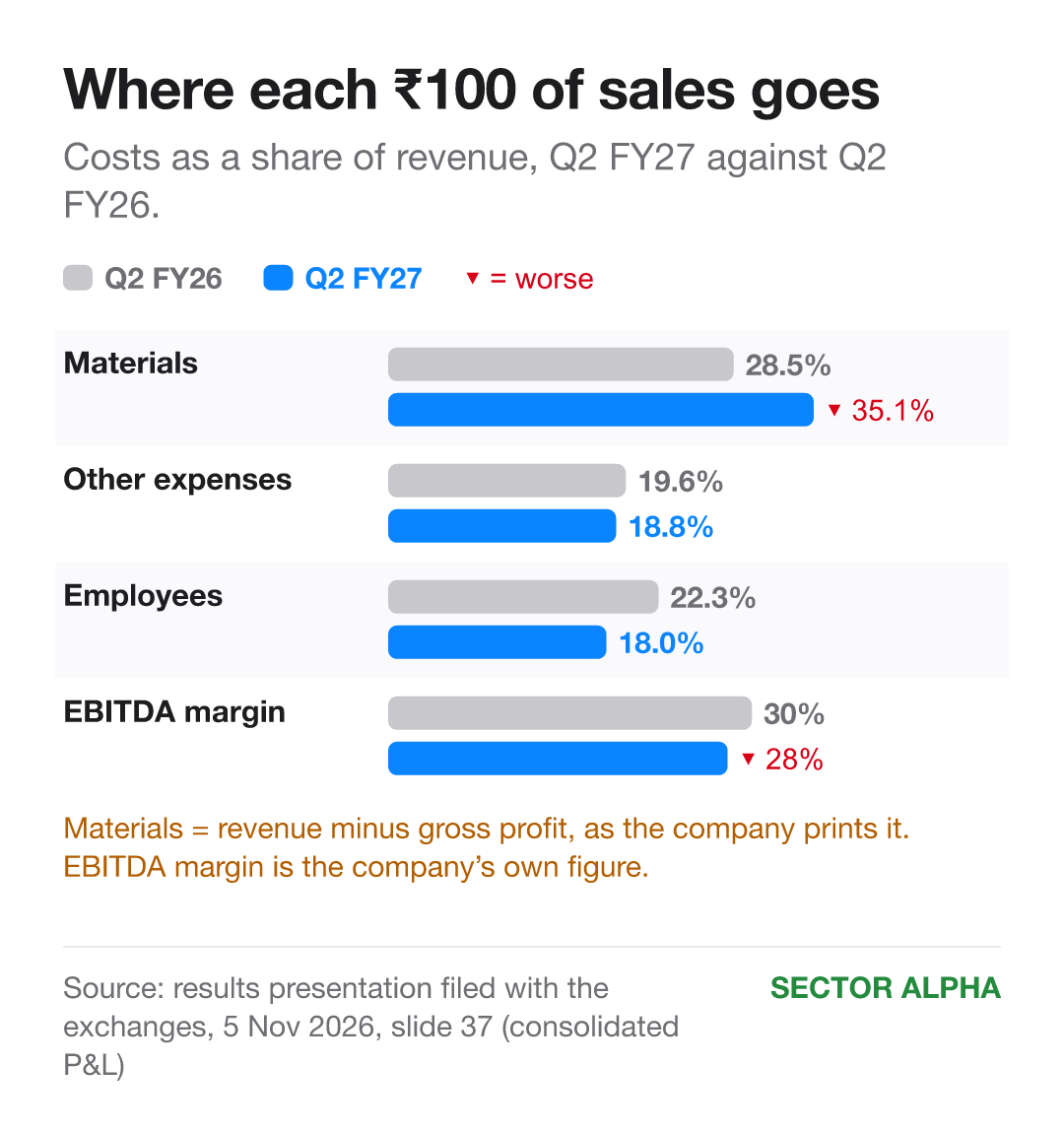
Raw materials took a bigger share of every ₹100 of sales in Jul to Sep 2026 than a year earlier. Why: more ingredient sales, and ingredient raw materials got pricier worldwide.
Management did not say how much of that cost rise it has passed on to buyers.
Staff and other costs took a smaller share. By my read, that is fixed costs spread over much bigger sales.
Licensing income helps here: it has no material cost, though the CFO said it carries research costs paid earlier.
Cash and debt
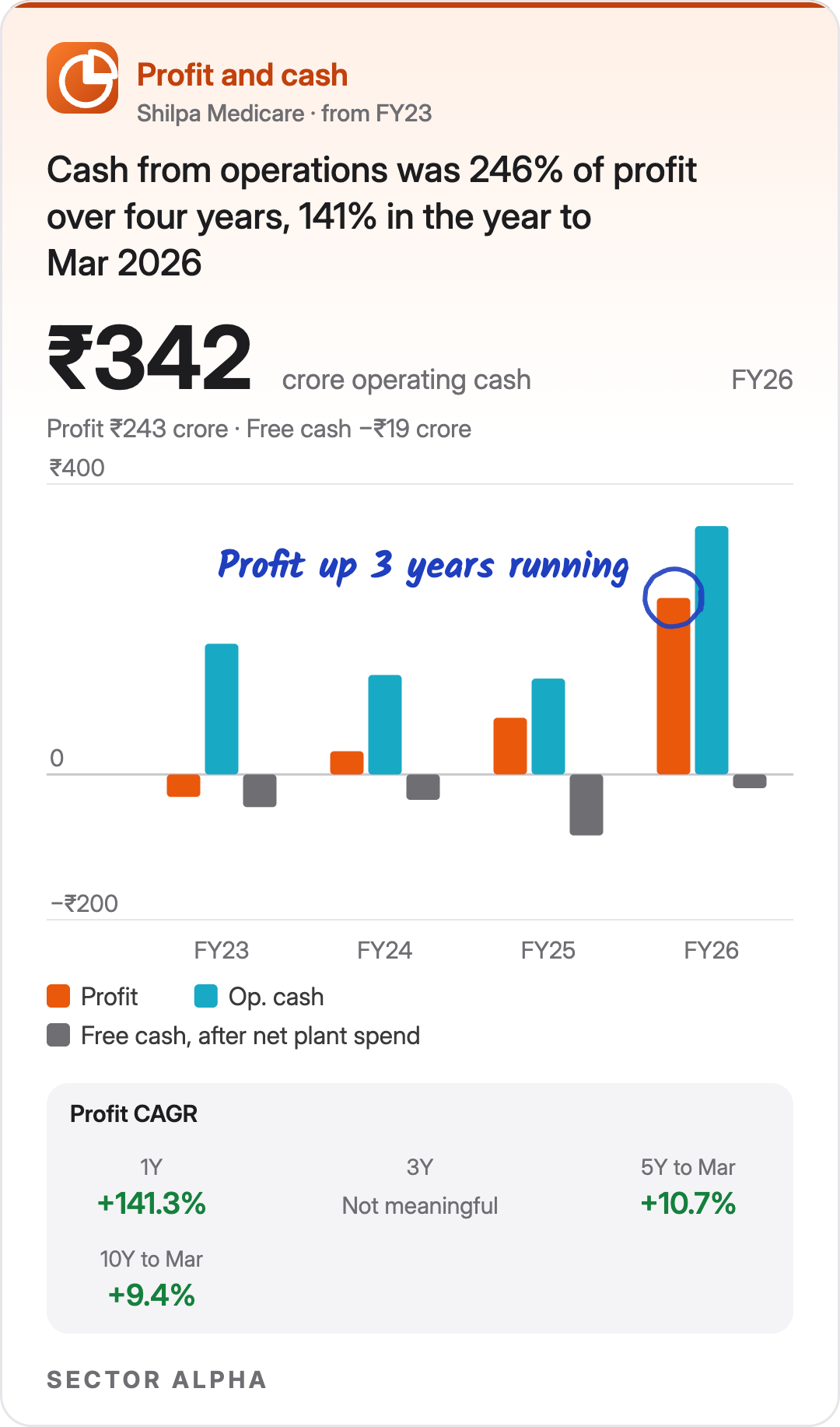
For years, cash from the business fell short of what Shilpa spent on plants. Why: these were what the CEO called “the years of investing ahead of revenue”.
In Apr to Sep 2026 that flipped: cash from the business covered the plant spending, which the CFO said was paid mostly from the company’s own earnings.
The biggest project is peptides, the type of drug that includes GLP-1 injections such as semaglutide. Shilpa runs four peptide production lines, is adding two more, and plans to finish one of India’s largest peptide plants by Mar 2027.
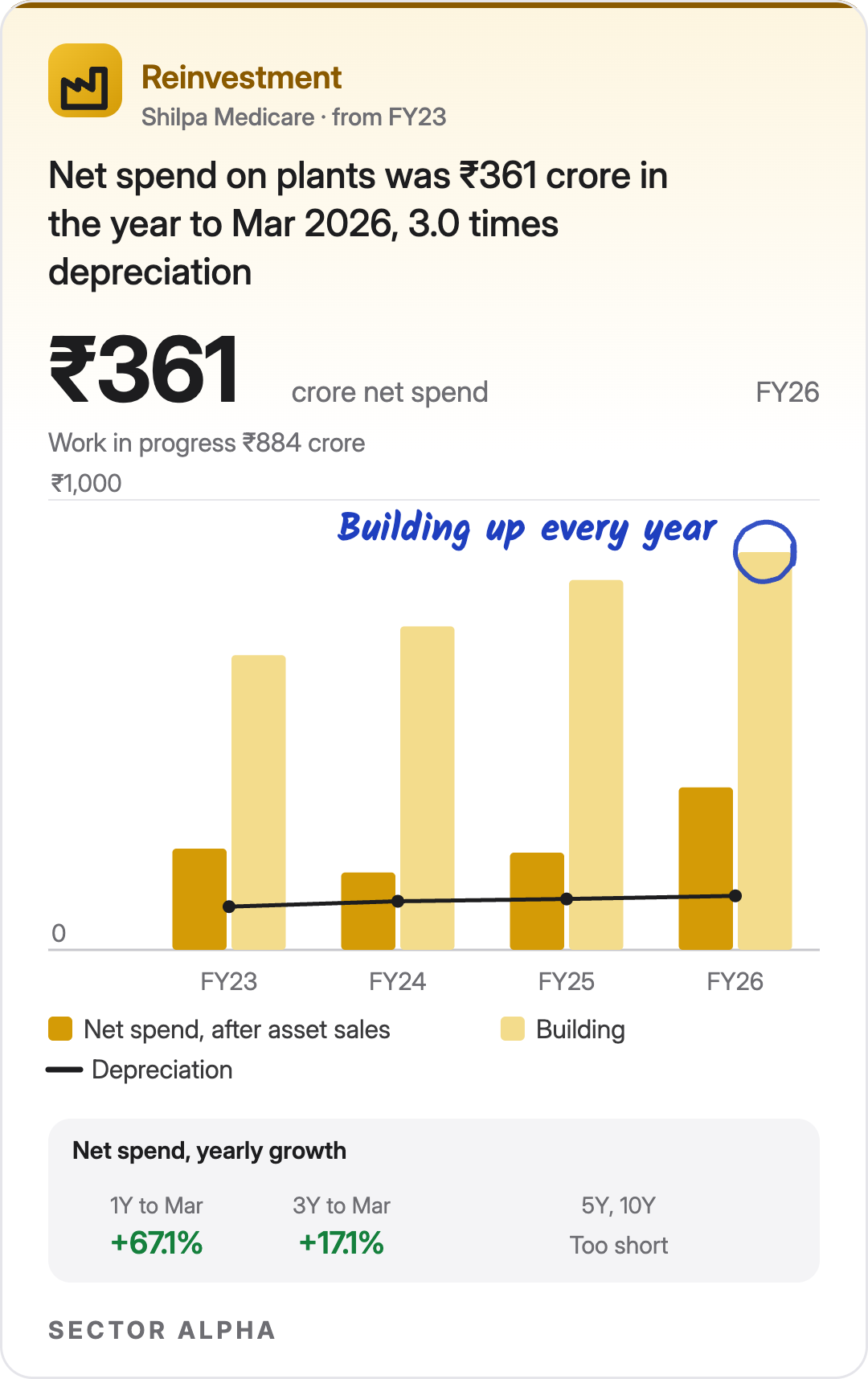
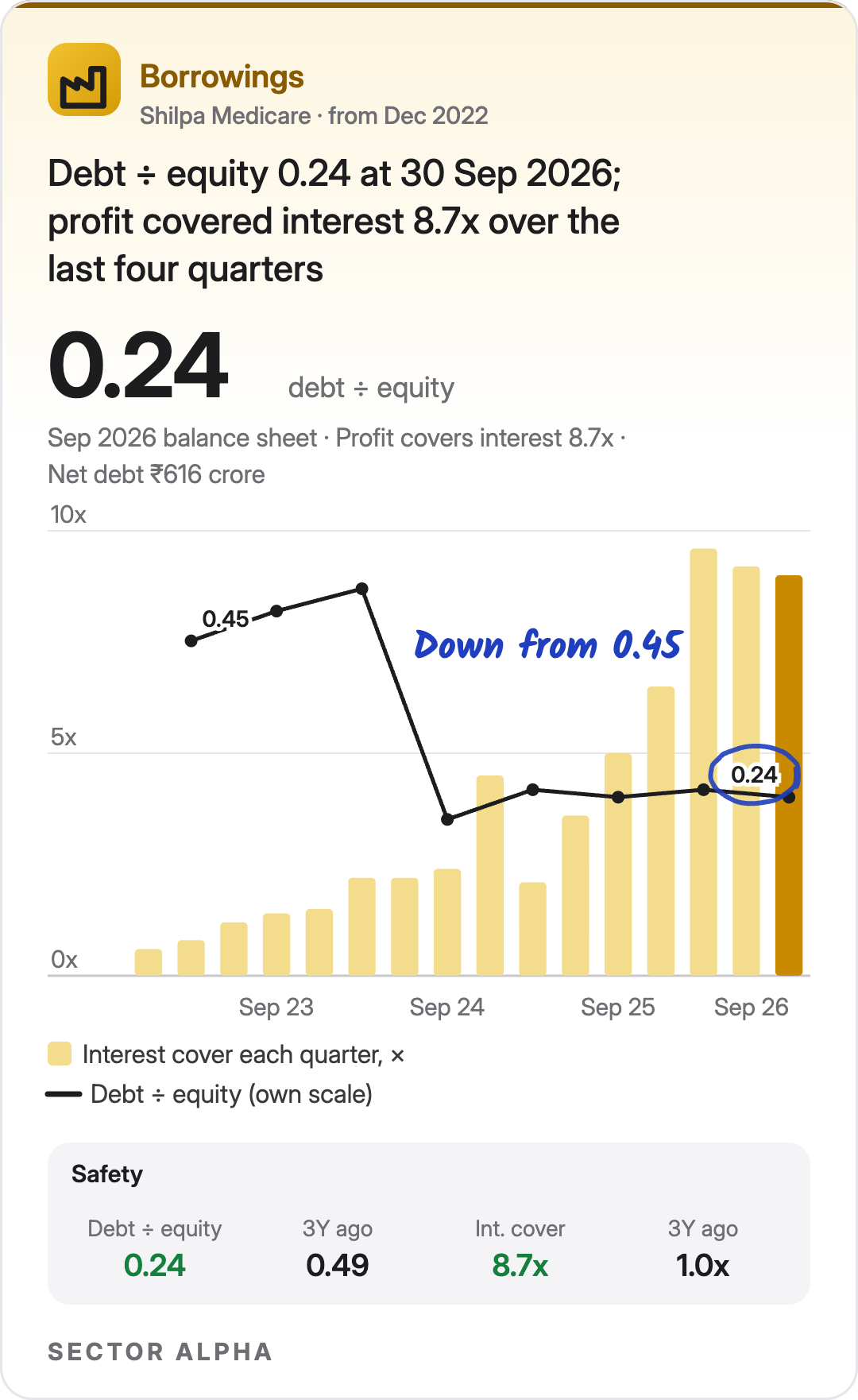
Debt: borrowing is small next to the owners’ money in the business. Net debt, borrowings minus cash, has stayed steady despite the bigger plant spending, the CFO said on 5 Nov 2026.
On 5 Nov 2026 the CEO said the USD 50 million peptide investment will be spent in stages, depending on how well customers use the capacity already built.
Who owns Shilpa Medicare
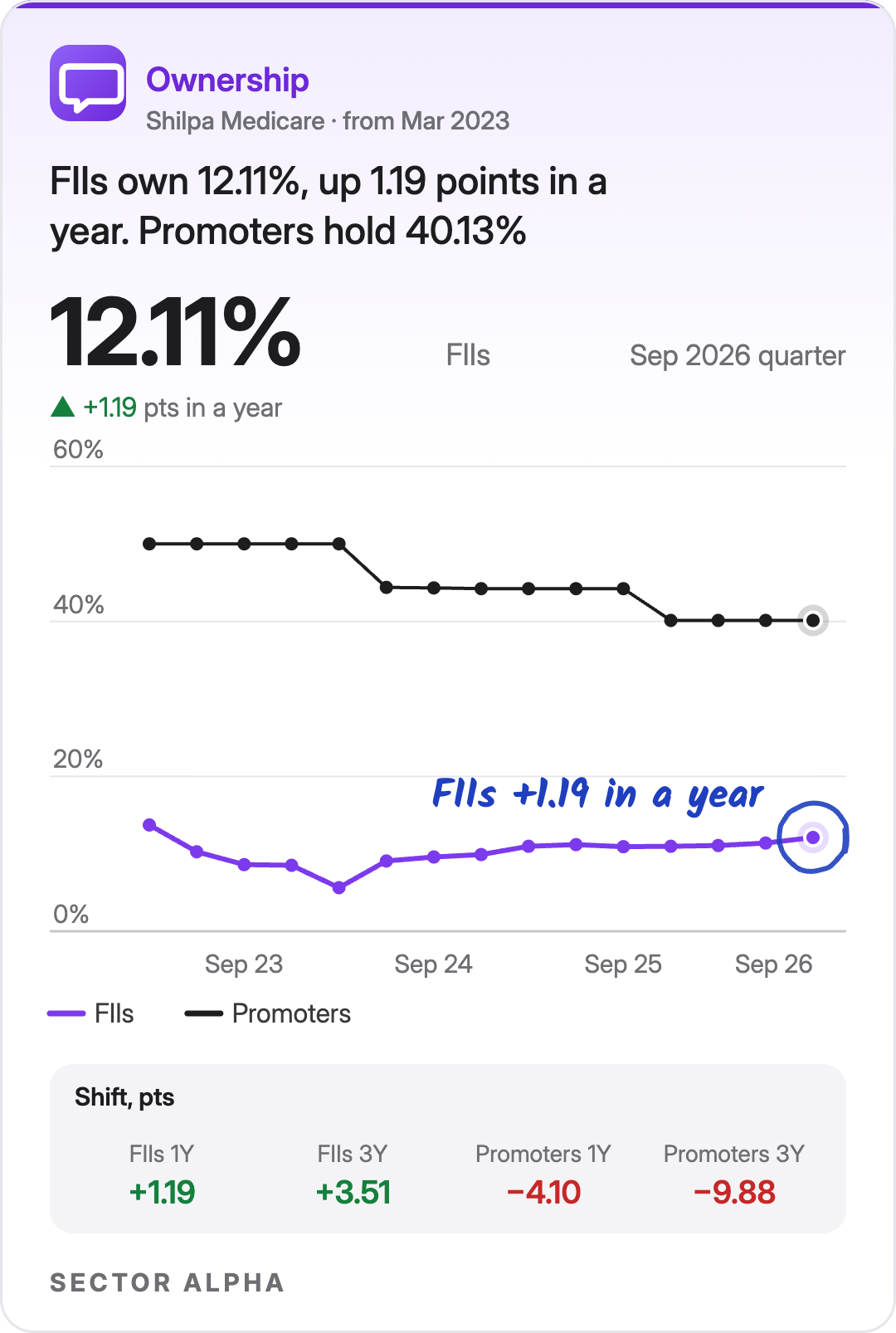
Between Jun and Sep 2026, promoters, the founding group, held steady. Indian and foreign institutions bought a little more.
The number of shareholders rose from 52,065 to 87,477 in the year to Sep 2026.
Management did not comment on ownership on the call.
What management said, what happened
I compared the 5 Aug 2026 call with the 5 Nov 2026 call.
Missed so far. Margin was expected to stay around 30%. Jul to Sep 2026 came in lower, for the mix and raw material reasons above.
On track. Peptide plant still due by Mar 2027, now with two lines being added to four.
Late. The first antibody-based cancer drug copy (ADC biosimilar) moved from human studies in FY27 to Apr to Sep 2027. Management did not say why.
Unchanged since 5 Aug 2026. The Rotigotine skin patch is still due in FY28. On 5 Nov 2026 the CEO said its launch had “got delayed by a couple of quarters” from an earlier plan, because a European approval for one raw material took two extra quarters.
On track. Aflibercept, an eye medicine copy, still due in India in FY27.
On track. Both partner biologic programmes, mAbTree and Alveolus Bio, still due in first human studies in FY27.
On track. More than 15 new generic cancer products still due in FY27.
Why is this happening
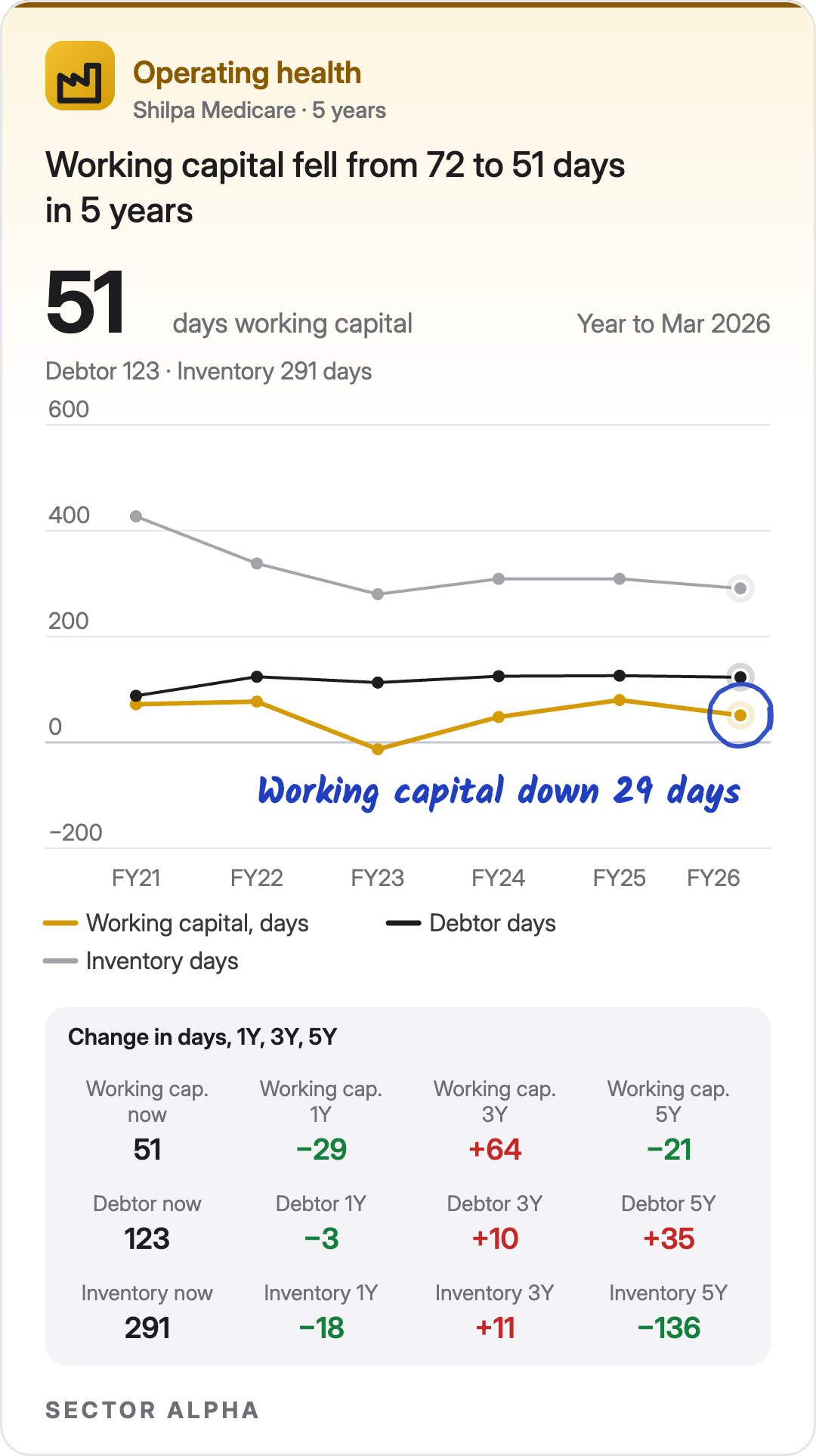
Spending turned into selling. Shilpa spent years building plants for ingredients, contract work, peptides and biologics before the sales came. Those plants were taking orders in Jul to Sep 2026, so sales grew faster than fixed costs such as staff pay.
Harder products. Management says it picks drugs that are hard to make, not ones where the cheapest supplier wins.
Mix and raw materials pull the other way. Strong ingredient sales and pricier raw materials thin the margin.
No forecasts. The company gives no sales or margin guidance, so the next quarters are judged on launches and plant use.
Shilpa is not built to compete on price alone.
Keshav Bhutada, Executive Director and Chief Executive Officer, Shilpa Pharma Life Sciences Limited, 5 Nov 2026
What he means: Shilpa wants to win on drugs that are hard to make, where price is not the only thing buyers look at.
So until raw material prices settle down, this will continue.
Keshav Bhutada, Executive Director and Chief Executive Officer, Shilpa Pharma Life Sciences Limited, 5 Nov 2026
What he means: the margin squeeze from costlier ingredient raw materials will last as long as those prices stay high.
What to track
Margin: does the raw material share of sales come down once raw material prices settle?
Peptides: does the new plant start by Mar 2027? On 5 Nov 2026 the CEO said he would talk about how full it runs “in the second half of next year”.
Eye medicine: does Aflibercept reach Indian patients in FY27?
Partner programmes: do mAbTree and Alveolus Bio enter first human studies in FY27?
Cancer generics: are more than 15 new products completed in FY27?
Delayed items: do the ADC biosimilar studies start in Apr to Sep 2027, and does the Rotigotine patch launch in FY28?
All of Shilpa’s numbers, every quarter, are on my page: sectoralpha.in/stocks/shilpa-medicare-ltd
— Roshan, Sector Alpha